Evaluating a skincare contract manufacturer is less about ticking a single certificate and more about judging whether their facility, quality systems, and working style actually fit your product and your target market. A supplier that looks fine on paper can still stall your launch through weak communication, unclear quality records, or a formulation process that does not match what you need. The checklist below covers the dimensions worth checking before you sign.
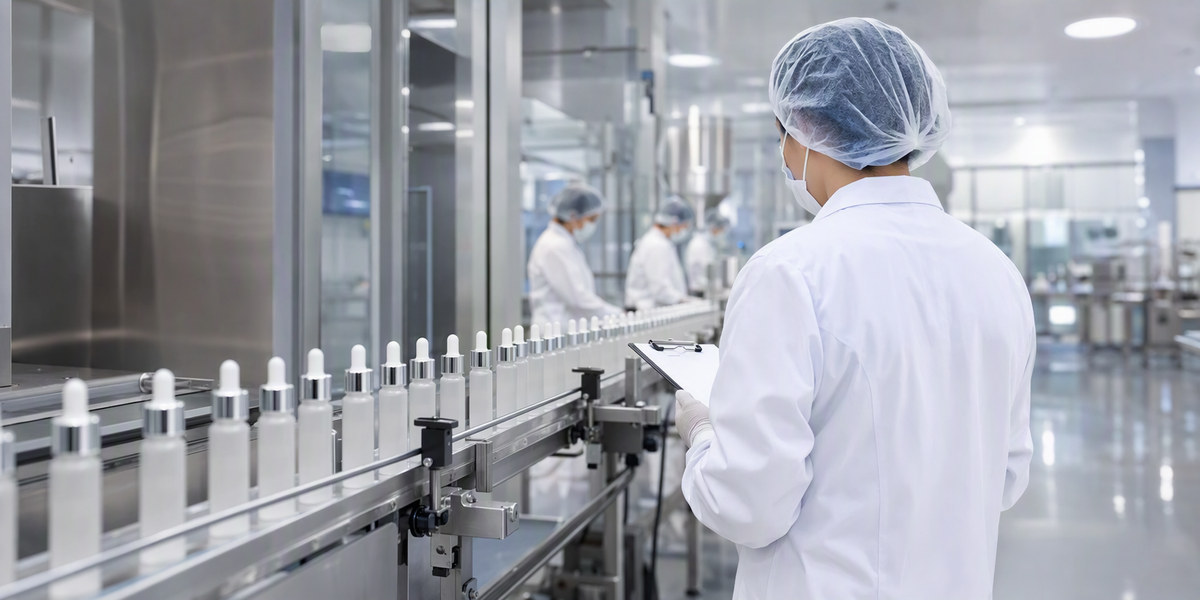
Start with the facility, and what a walkthrough tells you
A site visit, or at least a detailed walkthrough video, tells you more than a brochure. Look for a clean, logically laid-out production area with separation between people and material flow, dedicated zones for different steps, and evidence of routine sanitation. Ask about capacity relative to your forecast: a line running near its limit leaves little room for your reorders, while meaningful headroom signals they can grow with you. Also note whether lines are shared across many clients or partially dedicated, since that affects changeover discipline and cross-contamination controls.
Look at the quality system, not just the certificate
Certificates such as GMP or ISO 22716 are a starting point, not the whole answer. What matters is how quality is run day to day. Reasonable things to check: incoming material inspection before use, in-process controls during filling and mixing, and finished-goods testing before release. Ask whether they run stability testing and preservative challenge (micro) testing in-house or outsource them, and how long those programs typically take. Traceability is equally important — batch records, raw-material lot tracking, and a clear deviation or CAPA process show whether problems get found and fixed rather than buried.
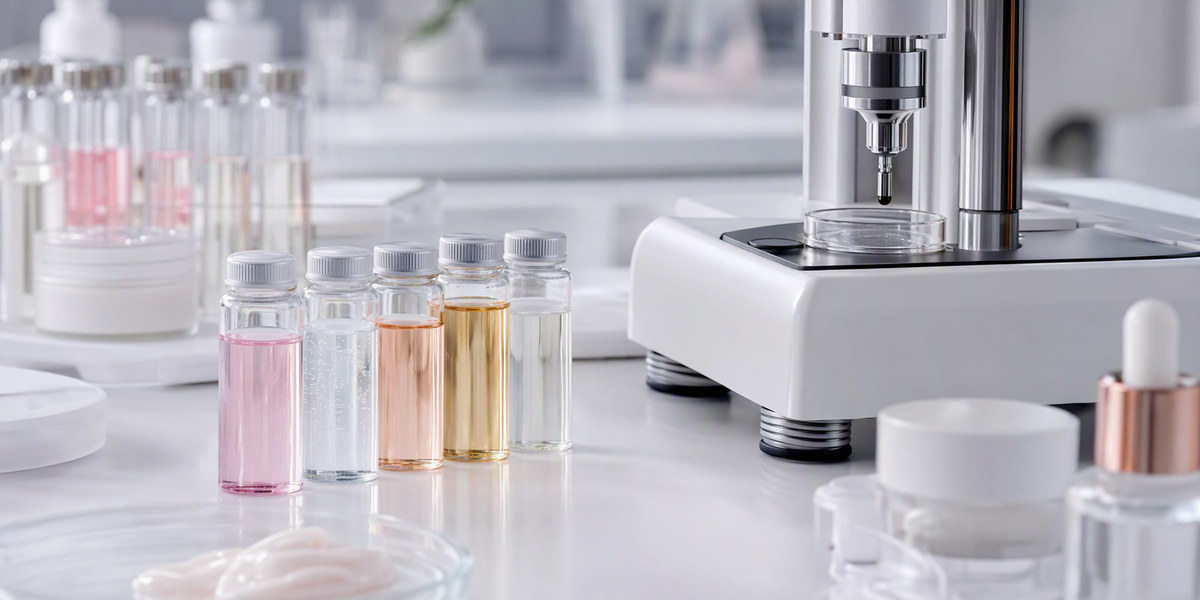
Judge formulation capability against your actual needs
Not every brand needs a fully custom formula. Many manufacturers offer stock or base formulas that can be branded with far shorter lead times and lower development cost, while others run a full ODM development service with an in-house R&D team. Match the model to your stage: a first launch may favor a proven base, whereas a differentiated product calls for custom work. Either way, test their sampling and iteration responsiveness early — slow or vague sampling is a preview of how the whole project will feel. If your plan involves specific actives, textures, or claims categories, ask directly whether they have handled them before.
Protect the formula and the relationship
Before you share a brief, confirm a non-disclosure agreement is in place. Then clarify who owns the formula: under many private-label arrangements the manufacturer holds the base formula, while custom development can be structured so the brand retains ownership or exclusivity. Ask what exclusivity actually means in practice — geography, formula, or packaging — and how confidentiality is enforced through access control and staff training. These points are easier to settle in the agreement than to dispute later.
Test communication before you rely on it
Communication problems are among the most common causes of delayed launches, and they are visible early. Note response times, language coverage for your team, and whether you get a named project contact rather than a rotating inbox. A good partner states milestones clearly, confirms changes in writing, and tells you early when something slips. If answers are vague during evaluation, expect more of the same once you are a paying client.

Ask for proof: references, track record, and regulatory support
Request references or examples of brands they have produced for, especially in markets similar to yours. Regulatory support is another differentiator: some manufacturers help assemble the Product Information File (PIF), appoint an EU responsible person for CPNP, or assist with FDA facility registration and market-specific labeling, while others leave compliance entirely to the brand. Knowing where that line sits helps you budget for the parts they do not cover.
Put it together with a simple scorecard
A short scorecard keeps the decision objective. For each dimension below, note what "good" looks like for your situation.
| Dimension | What good looks like |
|---|---|
| Facility | Clean, well-zoned, capacity headroom for your forecast |
| Quality system | IQC, in-process, finished-goods testing, traceable batch records |
| Formulation fit | Model matches your stage; responsive sampling |
| IP protection | NDA upfront; clear formula ownership and exclusivity terms |
| Communication | Named contact, clear milestones, written confirmations |
| Proof & compliance | Relevant references; defined regulatory support per market |
Conclusion
The right manufacturer is the one whose operations, quality discipline, and working style line up with your product and market — not simply the one with the lowest headline quote. Spend the evaluation effort up front, because the cost of switching partners after a launch is far higher than the cost of a careful audit now.
At CHONGSHENG FUTURE (重生未来), the OEM and ODM team works with skincare brands to structure manufacturing around a clear brief — from facility and quality transparency to formulation and regulatory support. If you are scoping a manufacturing partner, it is worth a conversation about what your product and market actually require before you commit to a batch.