
Contract manufacturing pricing for skincare is not a single sticker price. A quote from a cosmetic manufacturer is usually a bundle of separate cost layers, and the number you see depends as much on scope as on the formula itself. Understand what those layers are and you can compare suppliers on equal terms instead of guessing why two quotes for a "similar" product look nothing alike.
What actually goes into a skincare manufacturing quote
Most quotes group cost into a handful of layers. Raw materials and active ingredients sit at the base — the bulk emulsion or serum, the preservative system, and any featured actives. On top of that comes formulation and batching labor, then filling and primary packaging (the bottle, pump, or jar the product actually goes into), followed by secondary packaging such as the carton, label, and insert. Testing and documentation — stability, microbial challenge, and the paperwork a given market expects — form another layer. Finally, custom components such as a molded cap or a unique airless pump can add one-time tooling or setup cost on top of the recurring unit cost.
None of these layers is fixed across suppliers. One manufacturer may quote a low unit filling cost but recover it through packaging; another may fold testing into the unit price. That is why the headline number alone tells you very little.
Why per-unit cost moves with volume
A large part of manufacturing cost is fixed per batch rather than per piece. Setup, cleaning, line qualification, and quality checks happen whether you make 500 units or 50,000. Spread those fixed steps over a larger run and the per-unit share drops. Raw-material purchasing improves at scale as well, because bulk ingredient buys cost less per kilo than small lots.
This is where minimum order quantity matters. Below a supplier’s economical batch size, each unit quietly carries more of the fixed overhead, so the unit price climbs. Push well above it and the marginal saving flattens — you reach a point where ordering twice as much does not halve the price. A useful conversation with a manufacturer is not "what is your unit price" but "where does your price curve stop being worth the extra inventory."
Stock formula vs custom formula: the bigger lever
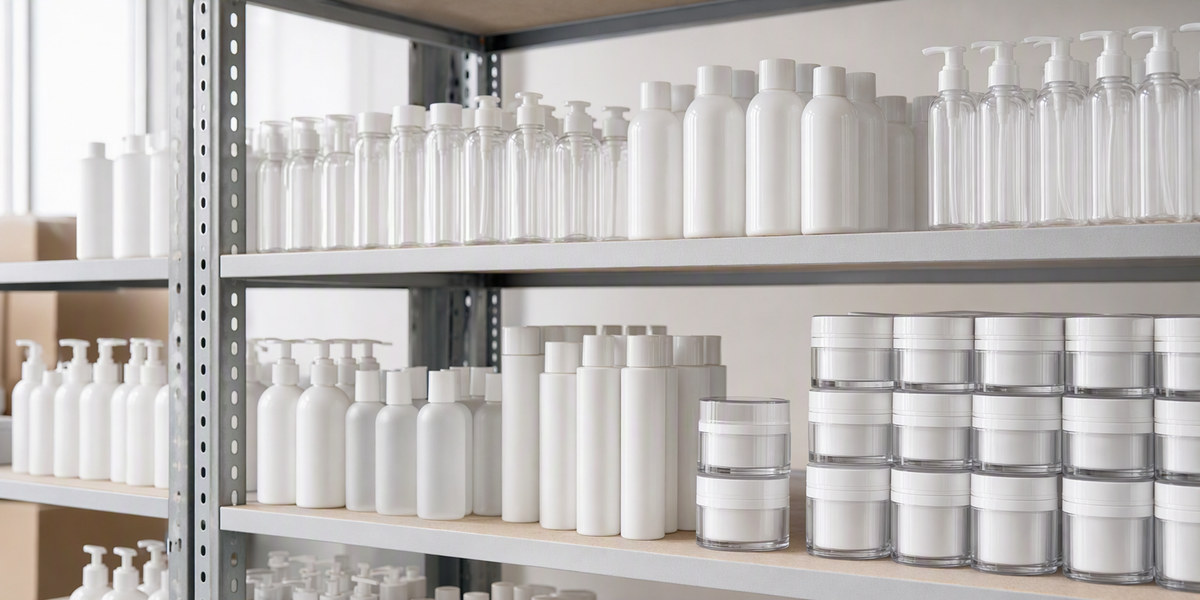
The single largest swing in price usually comes from formula and packaging choice, not from the manufacturer’s margin. A stock or off-the-shelf formula that the facility already produces needs no development work, no new stability program, and no regulatory build-out — so it is faster and cheaper to launch. A custom formula, by contrast, adds development rounds, pilot batches, and fresh stability and compatibility testing before it is production-ready.
Packaging follows the same logic. Standard bottles and pumps that the manufacturer stocks are economical; a custom-molded jar or a decorated closure adds tooling cost and longer lead time. Many brands start on a stock formula and standard packaging to validate demand, then move to custom components once the product has proven itself.
What a unit price usually excludes
A quoted unit price often covers the finished product leaving the factory, but not everything around it. Freight, import duties, and local regulatory registration are commonly outside the unit price. Depending on the agreement, secondary printing, market-specific document packages, and warehousing may be quoted separately or not at all. For an overseas brand, the trade term — whether the price is EXW, FOB, CIF, or DDP — changes the landed cost substantially. The same product can look cheap at the factory gate and expensive once it reaches your warehouse.
Asking "what is included and what is not" up front prevents the most common surprise: a low unit price that quietly becomes a high landed cost after freight, duties, and filing are added.
How manufacturing and quality steps add cost

The environment a product is made in also shows up in the quote. Manufacturing under GMP-controlled conditions, with documented batch records and in-process checks, costs more than informal filling but protects batch-to-batch consistency. Third-party or in-house testing — microbial limits, stability under heat and light, compatibility of the formula with its package — is a real cost that a serious supplier builds in rather than skips.
When a quote looks unusually low, one place to look is testing and documentation. Cutting those steps lowers the price today and raises the risk later, especially when a market authority or a retailer asks for proof.
How to compare quotes without getting misled
The fair comparison is like-for-like: same formula complexity, same primary and secondary packaging, same testing scope, same trade term, and same order quantity. Comparing only the headline unit price between a stock-formula quote and a custom-formula quote is meaningless, just as comparing an EXW quote against a DDP quote is meaningless.
Request a cost breakdown rather than a single total. A breakdown lets you see whether one supplier is cheaper on materials, another on filling, and a third on packaging — and it shows exactly where a low total is hiding reduced scope. It also makes future negotiations concrete: you can ask to revisit the packaging line or the testing scope instead of arguing over a number you cannot explain.
Questions worth asking before you sign
A few questions sort serious manufacturers from vague ones. What is the realistic minimum and re-order quantity? What does the quoted price include and exclude? Which testing and documentation are part of the scope, and for which markets? What is the lead time from approved artwork and formula to finished goods? Can the supplier show a transparent breakdown rather than a single figure?
At CHONGSHENG FUTURE (重生未来), the OEM and ODM team works with skincare brands to build quotes as transparent breakdowns — formula, filling, packaging, and testing shown separately — so the number you see reflects the scope you actually chose. If you are scoping a first production run, it is worth a conversation about which formula and packaging options fit your volume and market before you commit to a batch.