OEM, ODM and OBM describe three different ways a skincare brand can get a product made. The short answer: OEM means you bring the specification and the manufacturer builds to it; ODM means you pick a manufacturer’s existing formula and customize it lightly; OBM means the manufacturer also develops the brand around the product. The right one depends on how much formula control, speed and upfront investment your brand actually needs.
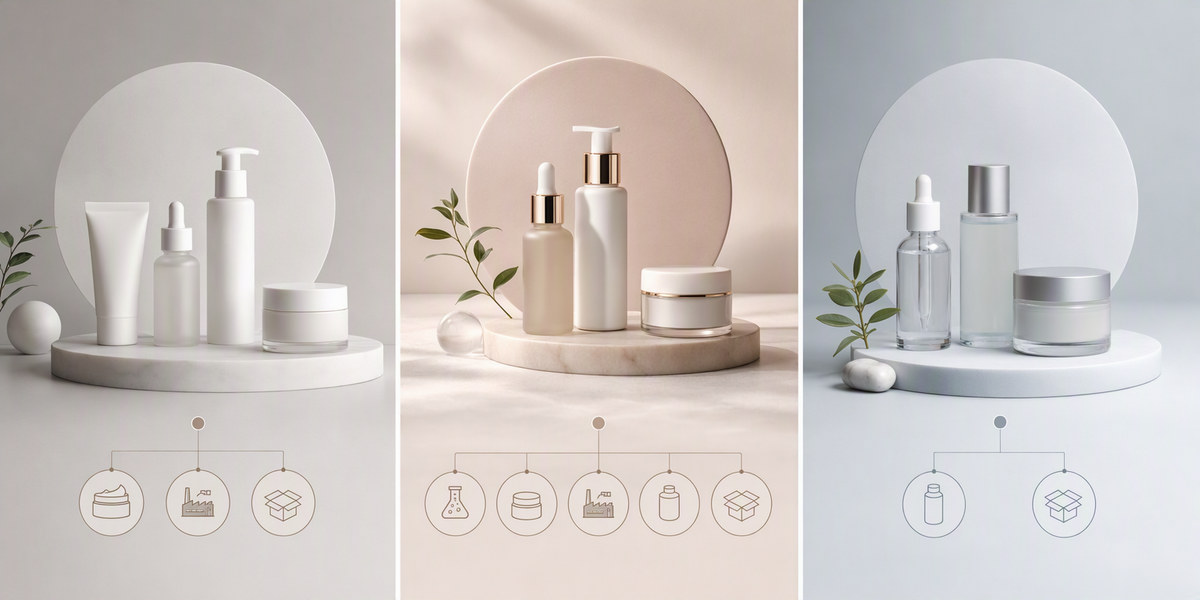
What do OEM, ODM and OBM actually mean?
These acronyms get used loosely, so it helps to fix the definitions first. Under an OEM (Original Equipment Manufacturing) arrangement, the brand supplies the product brief — formula direction, texture target, claims intent, sometimes a fully developed specification — and the contract manufacturer produces it. The brand keeps control of the design; the manufacturer supplies capacity, quality systems and routine documentation support.
Under ODM (Original Design Manufacturing), the manufacturer already holds developed base formulas or product platforms. The brand selects one and may adjust scent, color, viscosity or packaging. Development time is shorter because the formula foundation already exists. Under OBM (Original Brand Manufacturing), the manufacturer also takes on brand development around the product — naming, positioning, visual identity, sometimes go-to-market support — so the relationship reaches further than "make my spec."
Who owns the formula in each model?
This is usually the question that matters most, because it decides how defensible your product is later.
- OEM: the brand owns the specification and formula direction. The factory owns production, quality control, filling and routine paperwork.
- ODM: the factory owns the underlying base-formula IP. The brand owns light customization and the brand layer on top.
- OBM: the factory owns both formula and brand layer. The brand typically owns distribution and marketing, or co-owns them.
None of this is automatic — ownership is set by contract, not by the acronym. If exclusivity matters to you, it has to be written down, not assumed.

How fast can each model reach the market?
Speed follows directly from how much has to be developed before production.
- ODM / OBM: fastest, because a formula platform already exists. You are customizing, not inventing.
- OEM: longest, because formula development and validation sit on your critical path before a single unit is filled.
"Fastest" is not the same as "right for your goals." A model that reaches shelf quickly but leaves you with a shared, non-exclusive formula may cost you differentiation later. Weigh speed against the control question above.
What should a brand weigh before choosing?
Five factors tend to decide the fit more than any single feature:
- Formula control and differentiation — OEM gives the most; OBM the least.
- Speed to market — ODM/OBM are typically quicker; OEM needs development lead time.
- Upfront investment — OEM often means formula development and a firmer MOQ commitment; ODM lowers development cost; OBM can bundle the brand build into one engagement.
- IP and exclusivity — ask who holds the spec, whether it is exclusive or shared across clients, and put the answer in an NDA and a contract.
- Compliance scope — responsible-person duties, ingredient filing and claims boundaries differ by market (EU, US, ASEAN, GCC). The model does not change whose obligations apply; it changes who helps you meet them.
Which misunderstandings trip brands up?
A few assumptions cause expensive rework:
- "OEM is cheapest" is not reliably true — cost tracks development scope, MOQ and packaging, not the acronym.
- The model label is not a quality signal by itself. QC systems and certifications matter more than whether a partner calls itself OEM or ODM.
- ODM does not mean "no customization" — light customization is the norm; deep formula changes may simply push the project toward OEM.
- Switching later (for example ODM to OEM) is possible, but it means re-developing or re-owning the formula. Plan the IP clause early so the exit is clean.

How do you decide which model fits?
Start from your constraints, not from a partner’s catalog. If you hold a developed formula and want full control, OEM is the natural fit. If you have a brand and a timeline but not a lab, ODM gets you to market without building formulation from scratch. If you also want help shaping the brand itself, OBM extends the engagement one step further. Most growing brands move between models as they mature — the mistake is locking a model for reasons that no longer match the business.
Conclusion
OEM, ODM and OBM are not a quality ranking — they are different splits of who designs, who owns, and who builds. Pick the split that matches your formula control, speed and budget today, and keep the IP clause explicit so you can change direction later without losing the product. If you are scoping a manufacturing engagement and want to compare models against your actual brief, a contract manufacturer can walk through OEM and ODM options with you before any formula work begins.
Work with CHONGSHENG FUTURE
CHONGSHENG FUTURE (重生未来) works with skincare brands across OEM and ODM engagements, from specification and formula development to filling and routine documentation. If you are deciding which model fits your next launch, talk to our team about scoping an engagement around your formula control, MOQ and timeline.