Which Skincare Categories Are Actually Growing in Southeast Asia, and Why?
Southeast Asia’s skincare demand is shaped by three forces most brands outside the region underestimate: a tropical climate that stays hot and humid all year, UV exposure strong enough to make daily sunscreen a habit, and a large halal-conscious consumer base. Together they push a category mix — lightweight hydration, everyday sun protection, brightening and even-tone care, blemish and sebum control, and halal-certified lines — that looks different from what sells in European or North American markets. If you are sourcing a line for this region, the product brief should start from the climate, not from a bestseller list in another market.
Why does Southeast Asia play by different rules?
The region is not one country, but the climate and the shopping habit repeat across it. Equatorial and tropical conditions keep humidity high and temperatures warm every month, so skin rarely wants a rich occlusive cream. At the same time, UV index sits at elevated levels year-round, which makes sun protection a daily step rather than a beach-day exception. On the commercial side, discovery happens largely inside social and live-commerce apps, where short demonstrations and price-accessible formats win attention. A brand that imports a formula built for a temperate, department-store market often finds the texture, the claim and the price all miss.
What does "everyday sunscreen" mean here?
In many Western routines sunscreen is seasonal; in Southeast Asia it is a daily facial step. That changes the product requirement from "high protection for a holiday" to "something people will actually reapply." The winning attributes are high SPF with a light, non-greasy finish and no visible white cast, often in a fluid or gel-lotion rather than a thick cream. For a contract manufacturer this means emulsion stability at heat, a pleasant spreadability, and pigments or filters that do not chalk on deeper skin tones.
Why is brightening such a steady category?
Concerns about uneven tone, dark spots after blemishes, and dullness are consistently high across the region, so brightening and even-tone care is a perennial shelf staple. The careful part is language: local advertising codes in several markets restrict or scrutinize "whitening" and any medical-sounding promise. The safer, durable phrasing is "brightening" or "even tone," paired with ingredients used at recognized, documented levels. Brands that lead with a restrained claim tend to stay on shelf longer than those that overpromise.
What hydration works in humidity?
Humidity does not remove the need for moisture — it changes the feel people accept. Gel textures, light emulsions, and non-comedogenic finishes perform better than heavy balms. The formulation brief should specify "light, fast-absorbing, non-comedogenic" as a texture target, not just a list of actives. Barrier support (niacinamide, ceramides, panthenol at standard ranges) fits naturally because it answers both moisture and sensitivity without crossing into medical-sounding claims.
Is blemish and sebum care still in demand?
Yes, and for a straightforward reason: heat and humidity raise sebum and sweat, which keeps blemish and oil-control care in steady demand. These products must stay gentle — harsh stripping formats lose repeat buyers. A common, defensible approach is mild cleansing, light moisturization, and spot-oriented ingredients used within accepted limits, with claims kept to "helps reduce the look of" rather than wording that promises a fix.
Is men’s grooming a real opening?
Men’s grooming is one of the faster-moving sub-segments, often starting from simple routines — cleanser, moisturizer, sunscreen, and post-shave care. The opportunity is less about a separate "male" chemistry and more about packaging, scent, and a simpler step count that fits a new user. For a private label program this is a low-risk way to extend a core line without inventing new actives.
Why a halal-certified line is a category, not a label?
In Indonesia and Malaysia especially, a halal-certified line is not a nice-to-have sticker; it is a purchasing requirement for a large share of shoppers. That has real formulation consequences: raw materials, processing aids, and even fragrance and capsule shells need to meet halal criteria, and production needs documented controls against cross-contamination. The certifying bodies differ by country (for example BPJPH in Indonesia, JAKIM-recognized processes in Malaysia), and the paperwork is part of the launch plan, not an afterthought.
What should the brief tell the manufacturer?
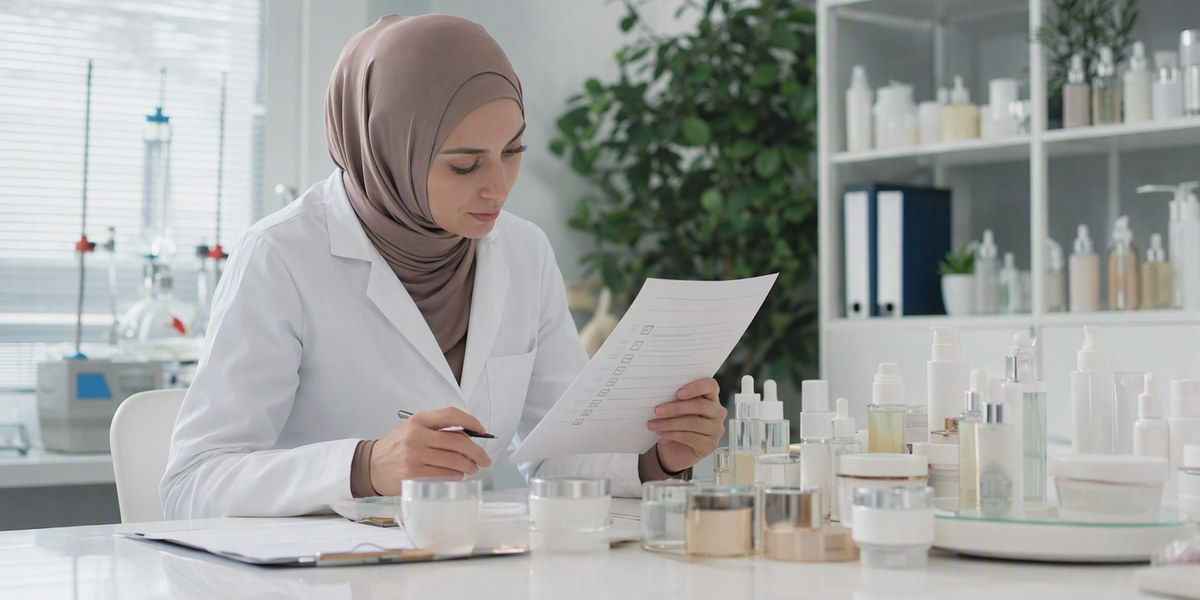
When you brief a contract manufacturer for Southeast Asia, the climate and the channel should drive the specification. The table below maps each demand to what it means on the bench.
| Demand | What it means for formulation | What it means for the brief |
|---|---|---|
| Year-round heat and humidity | Stable emulsions, heat-resistant packaging, light textures | Specify climate-stability testing and a light finish |
| Daily sun exposure | High-SPF fluid or gel-lotion, low white cast | Set SPF and finish as a product requirement, not a label |
| Brightening interest | Even-tone actives at documented levels | Use "brightening / even tone" wording; avoid medical claims |
| Halal-conscious base | Halal-suitable raw materials and controlled production | Plan certification early; name target markets |
What about claims and compliance?
The ASEAN region shares a harmonized cosmetic ingredient baseline through the ASEAN Cosmetic Directive, but product notification is done country by country, and each market has its own regulator and rules that change over time. Indonesia, Malaysia, Thailand, and Vietnam each run their own cosmetic authority, and halal certification follows separate national processes. Take any specific agency name, threshold, or timeline as something to verify for your exact target markets before you print a claim or a label. The safe habit is to write claims that describe appearance and feel, keep them conservative, and confirm the local rules with the manufacturer or a local consultant.
How should a brand act on this?
Start the brief from the climate and the shopper, not from a product that sells abroad. Pick two or three categories from the list above, set a light texture and a conservative claim style as defaults, and decide early whether a halal-certified line is in scope. If you want a partner who can stress-test your brief against humid-climate stability, halal material controls, and per-market claim rules before sampling begins, our technical team can review it with you.
If you are preparing a Southeast Asia range and want to check your product brief against real production constraints — texture stability, halal material planning, and per-market claim limits — our technical team can review it with you before sampling begins.