Most acid-based skincare actives perform within their intended window when the finished-formula pH sits roughly between 3.0 and 4.5, but the exact acid skincare pH window depends on the acid type, concentration, product format, and the tolerance level you are targeting.
That range is a useful planning reference, not a universal rule. Glycolic, lactic, and salicylic acids all behave differently once they are mixed with water, humectants, thickeners, and other actives. The pH you choose changes how much of the acid is present in its protonated, or "free acid," form, and that free-acid fraction is what drives exfoliation. Push the pH too low and you gain activity at the cost of irritation risk and ingredient instability. Move it too high and the formula becomes gentler but may lose the effect the brand is paying for.
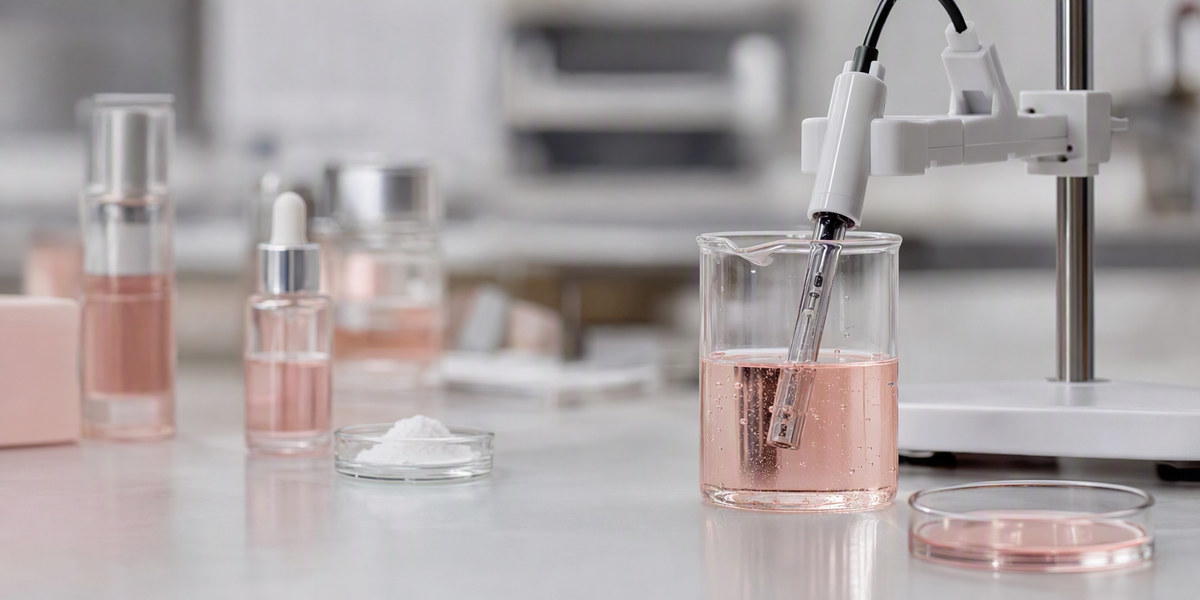
Why Does pH Matter for Acid Actives?
AHAs and BHAs are weak acids. In solution they exist in balance between a protonated form and a dissociated, or ionized, form. The protonated form is the one that penetrates the stratum corneum readily and produces the exfoliating effect associated with these ingredients.
Because that balance is governed by pH, a small shift of half a pH unit can noticeably change the free-acid fraction. At pH 3.0, a larger share of the acid remains protonated; at pH 5.0, much more of it has dissociated. This is why two products with the same declared acid percentage can feel and perform differently: the one at the lower pH may deliver stronger exfoliation, while the one at the higher pH may feel milder but give a softer effect.
The practical takeaway is that concentration and pH should be considered together. A low concentration at a low pH can still deliver meaningful activity, while a high concentration at a high pH may be surprisingly gentle. This pairing is one of the first things a formulator adjusts when designing for a specific market position.
What Is the Typical pH Range for Common Acids?
The table below shows commonly used pH windows for popular acid actives in leave-on cosmetic formulas. These are typical starting points used during development; the final value should be confirmed through stability and tolerance testing.
| Acid | Common leave-on pH range | Notes |
|---|---|---|
| Glycolic acid | 3.0 – 4.0 | Small molecule; lower pH can increase activity but also irritation potential. |
| Lactic acid | 3.5 – 4.5 | Often perceived as slightly milder than glycolic at comparable pH. |
| Salicylic acid (BHA) | 3.0 – 4.5 | Solubility and delivery system matter as much as pH. |
| Mandelic acid | 3.5 – 4.5 | Larger molecule; commonly used at somewhat higher pH. |
Rinse-off products such as cleansers or short-contact peels may use a wider pH span because skin contact time is brief. The appropriate window also changes if the formula is buffered or if the acid is encapsulated, both of which can slow release and shift the effective pH at the skin surface.
What Else Changes When the pH Drops?
Adjusting pH is not just about the acid itself. The rest of the formula has to remain stable, safe, and pleasant to use once the pH moves into the acidic range.
- Viscosity and texture. Carbomer and some acrylic thickeners are highly pH-sensitive. A drop from pH 5.5 to pH 3.5 can collapse viscosity or cause separation unless the thickener is selected for acidic systems.
- Other actives. Peptides, certain retinoids, and some antioxidants may degrade faster or become less compatible in strongly acidic media. Formulators often isolate these into separate products or adjust their concentrations.
- Preservation. Acidic pH can change the effectiveness of a preservative blend. The same preservative system may need adjustment when the formula moves from a neutral to an acidic environment.
- Packaging. Acidic serums can interact with metal components, certain rubbers, and some plastics over time. Airless or opaque packaging is commonly considered for photosensitive or oxidation-prone acid formulas.
These interactions are why a formula that looks good on paper can fail during stability testing. Monitoring pH drift, color, odor, and viscosity at multiple time points is a normal part of acid product development.
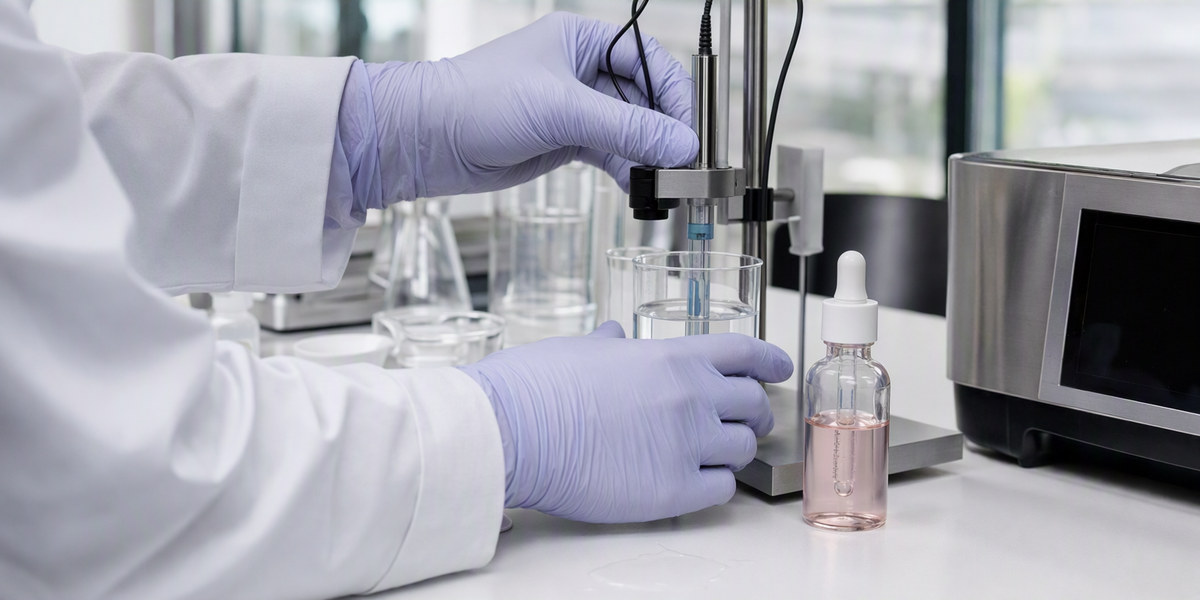
What Should a Brand Verify Before Scaling?
Before moving an acid formula into production, brand teams should confirm more than the starting pH. The development record should show how the product behaves over its intended shelf life and under realistic storage conditions.
- pH drift. Does the pH stay within the target window after 1, 3, and 6 months at elevated temperature?
- Microbial challenge. Is the preservative system effective at the final acidic pH and water activity?
- Tolerance data. Has the formula been evaluated on a panel that matches the intended consumer profile and usage frequency?
- Packaging compatibility. Have the closure, dropper, pump, and any metal parts been exposed to the formula for the full stability duration?
- Claim support. Are the proposed claims limited to appearance or cosmetic function, and do they align with the target market’s rules?
Skipping any of these steps can lead to surprises after launch: separation, odor change, unexpected irritation reports, or regulatory pushback on claims.
How Do Market Rules Affect Acid Claims?
Acid products are cosmetics, not drugs. That means claims should stay at the level of appearance, cleansing, and sensory benefit. Language such as "exfoliates," "helps skin feel smoother," or "improves the look of texture" is generally acceptable, while claims that name acne, dermatitis, or wrinkle removal cross into drug or medical territory in many markets.
Concentration limits and labeling requirements also vary. Salicylic acid, for example, is restricted to specific percentages and carries warning requirements in several major markets. A formula that is acceptable in one country may need a different concentration, different labeling, or a different INCI declaration elsewhere.
Because rules change and are interpreted differently by local authorities, the safest approach is to review the proposed acid type, concentration, pH, and claims for each target market before artwork is finalized. A contract manufacturer with regulatory documentation experience can help map these differences, but the brand remains responsible for the final claim wording in its sales territories.
If you are developing an acid-based serum or toner and need support with pH targeting, stability testing, and claim review, our technical team can assess the formulation route before sampling. At CHONGSHENG FUTURE(重生未来), we run OEM and ODM skincare programs and can help align your acid formula with the requirements of your target market.