A private label skincare timeline from brief to delivery typically moves through nine connected stages — brief, formula route, sampling, claims lock, testing, packaging, documentation, production and quality release — and for most brands it spans a few months rather than a few weeks. The exact length depends on the formula route, the packaging you choose, the testing program and the target market, not on the filling step alone.
What does "brief to delivery" actually include?
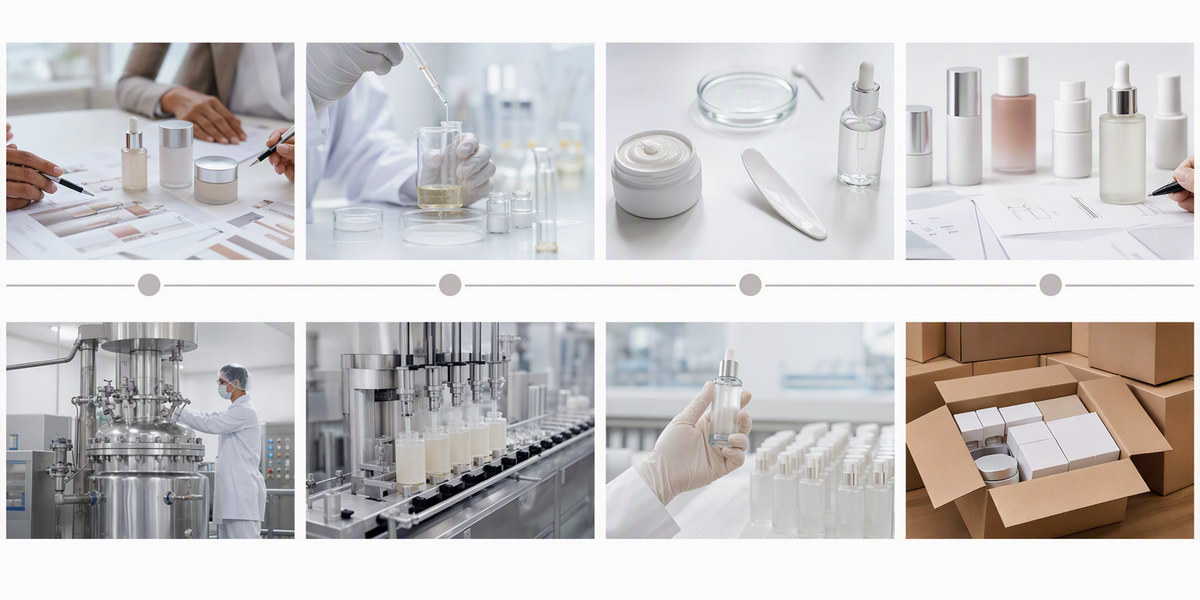
Many first-time brand owners picture the timeline as "make the product, then ship it." In practice the clock starts long before production and keeps running after filling. A full private label skincare timeline covers development, sampling, testing, packaging sourcing, market documentation, production and a final quality release. Viewing it as one continuous critical path helps you see where delays actually come from.
Which route sets the pace first — OEM or ODM?
The earliest decision that shapes the schedule is whether you build a custom formula or adapt an existing one.
- OEM: you control or supply the specification and a custom formula is developed. This usually adds development time up front but gives you more control over the formula and its positioning.
- ODM: an existing base formula is adapted to your brief. Because the base already exists, first samples often arrive sooner, which is why ODM is commonly chosen when a brand wants to test demand quickly.
Formula ownership and usage rights are not automatic — they should be defined in the manufacturing agreement, and the wording affects what you can do with the formula later.
What does a stage-by-stage private label skincare timeline look like?
The sequence below is a planning reference, not a fixed standard. Real projects compress or extend individual steps depending on complexity and readiness.
| Stage | What happens | Typical planning window |
|---|---|---|
| Brief & alignment | Target market, category, format, claim level and estimated volume are confirmed. | A few days to a couple of weeks |
| Formula route | OEM custom development or ODM base adaptation is chosen. | Decided up front |
| Sampling | First samples are prepared; one or more adjustment rounds may follow. | A few weeks; longer for custom formulas |
| Claims lock | Appearance and function-level claims are confirmed for the target market. | Days to weeks |
| Testing | Stability and preservative efficacy work, often run alongside packaging development. | Several months for accelerated stability |
| Packaging & artwork | Components are sourced or tooled; labels are designed to match market rules. | Often the longest single step |
| Documentation | Market files such as PIF, CPNP notification or NMPA filing are prepared. | Varies by market |
| Production | Filling and finishing run once formula, artwork and components are approved. | Several weeks |
| Quality release & shipment | COA and internal QC clear the stock for shipping. | Days to weeks |
A straightforward line on stock packaging with an adapted ODM base can reach delivery in a few months. A custom OEM formula with custom packaging and a full testing program commonly takes longer — often several months rather than weeks.
What drives the schedule more than the filling itself?
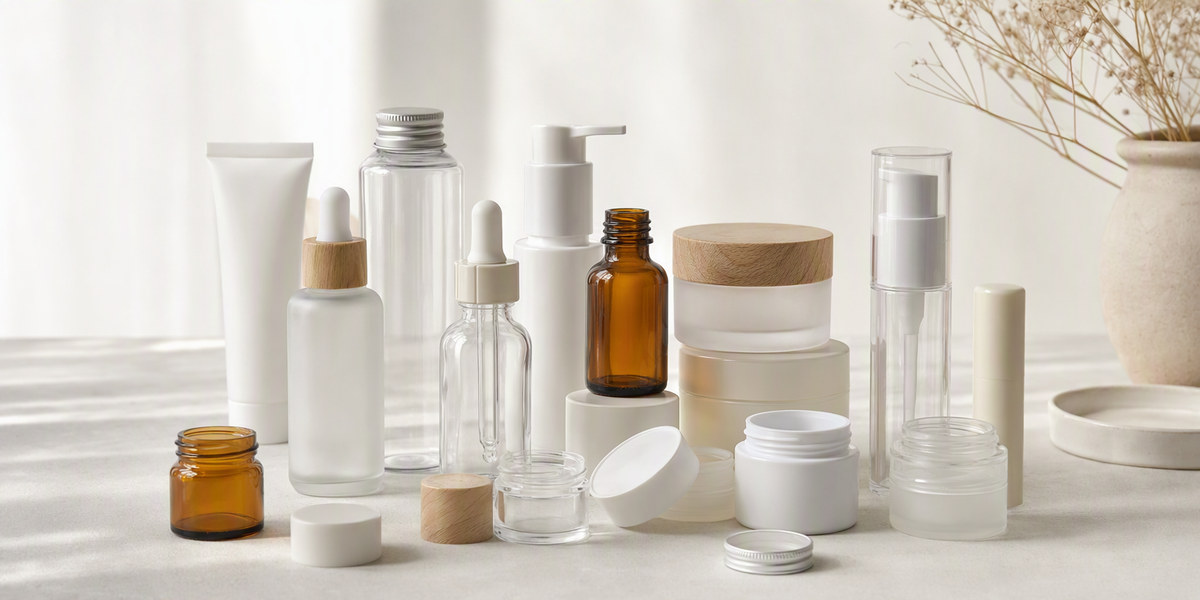
The largest variable is usually component and packaging lead time, not the filling operation. Stock bottles and jars are shorter; custom molds and decoration can add weeks or more. Late artwork changes, a custom raw material that needs sourcing, or a formula change that triggers testing re-runs all push the date out.
What should a brand prepare before the clock starts?
A clear brief is the cheapest way to protect the timeline. Before contacting a manufacturer, have these points ready:
- Target market(s) and the claim level those markets allow.
- Product category and format — serum, cream, cleanser or another type.
- Positioning and acceptable claims at the appearance or function level.
- Estimated volume and your MOQ expectation.
- Packaging preference: stock or custom.
- Ingredient preferences or restrictions.
- Any facility frameworks you require, such as ISO 22716 or GMPC, stated as examples rather than universal rules.
The more of this you can state up front, the fewer rework loops you will run later.
How do claim rules change the timeline by market?
Claim requirements vary by market, product type and wording. A claim that is acceptable in one region may need different wording or substantiation elsewhere, and preparing those materials takes time. Keep cosmetic claims at the appearance and function level — moisturizing, lightweight, refreshing, or helping support the skin’s natural barrier. Avoid wording that implies a therapeutic effect, which sits outside the cosmetic scope and can block a launch.
What can you do to keep the timeline realistic?
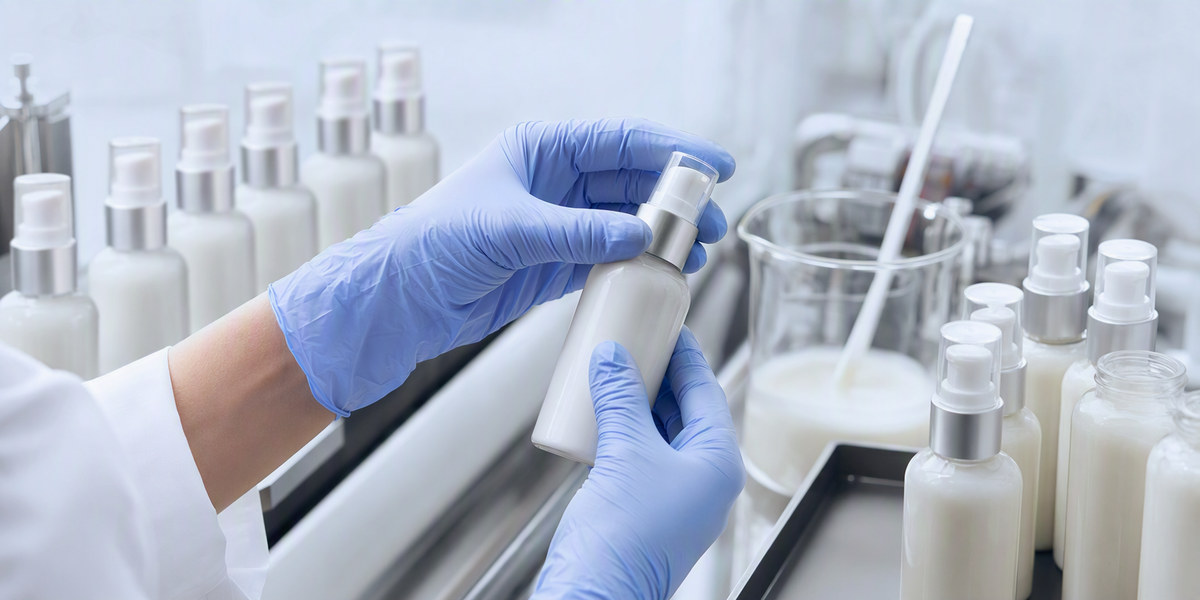
Lock the brief early, choose packaging before sampling if possible, and let stability and preservative efficacy testing run in parallel with artwork and component sourcing. Confirm the regulatory pathway for each target market before production is booked, so documentation does not become the final bottleneck.
If you are scoping a private label line and want to pressure-test your brief against real production constraints, our technical team can review the formula route, packaging lead time and testing plan with you before sampling begins.