Centella Asiatica should be added to a skincare formula as a standardized botanical extract or a single isolated fraction — most often Centella Asiatica leaf extract, Centella leaf water, madecassoside, or asiaticoside — with the working level set by the raw material’s assay, the product format, and the claim you intend to make, rather than by a fixed percentage. Getting the form and the level right before sampling saves rework later.
What Is Centella Asiatica in a Cosmetic Context?
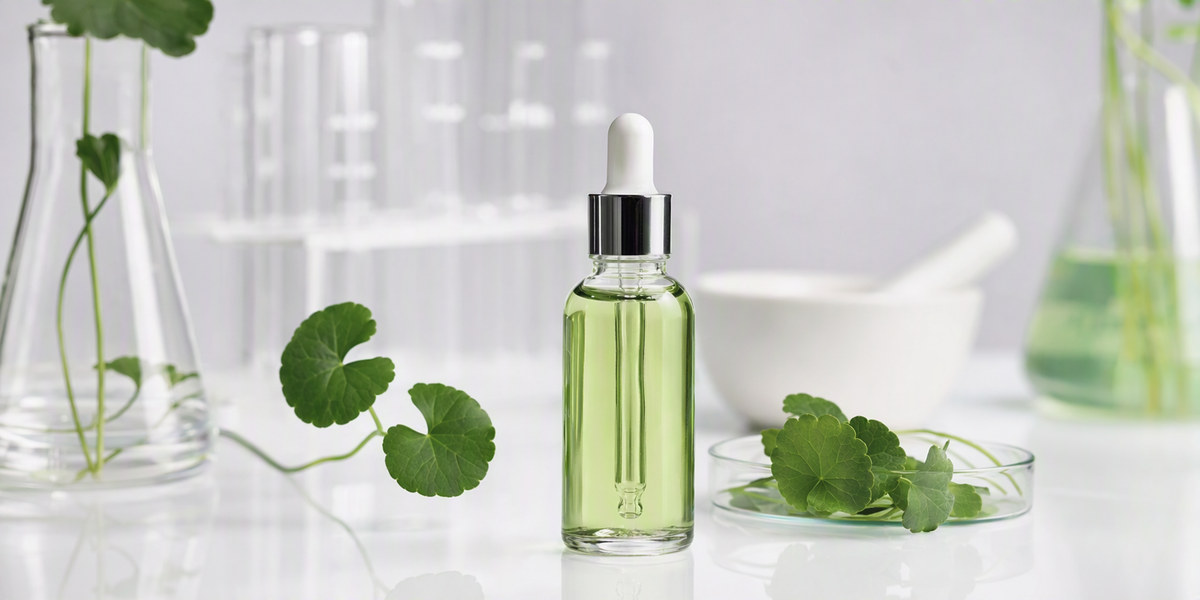
Centella Asiatica is a perennial plant also known as gotu kola. In cosmetics it is used as a botanical ingredient, frequently marketed under the name "Cica." It is an ingredient, not a finished-product claim by itself. The fractions that formulators care about are triterpene derivatives — asiaticoside, madecassoside (the glucoside of madecassic acid), asiatic acid, and madecassic acid. When a label says "Centella," what usually matters for the formula is which of these fractions is present and at what standardization. The plant appears across toners, serums, creams, and after-sun type products, which is why formulators use it as a flexible conditioning ingredient rather than a single-function additive.
Which Centella Forms Can You Choose From?
The form you select drives the inclusion level, the color contribution, and the claim wording. The common options map to different INCI names and raw-material specifications. The right choice depends less on which name sounds familiar and more on what your formula can carry — color, solvent, and the claim you want to make.
| Form | What it is | Typical INCI name |
|---|---|---|
| Leaf extract | Liquid or powder extract of the leaves, water-, glycerin-, or oil-based | Centella Asiatica Leaf Extract |
| Leaf water | Distillate / hydrosol from the leaves, water-like | Centella Asiatica Leaf Water |
| Madecassoside | A single standardized triterpene glucoside, often high purity | Madecassoside |
| Asiaticoside | A single standardized triterpene saponin | Asiaticoside |
| Root extract | Extract from the root portion | Centella Asiatica Root Extract |
"Cica" is a marketing term, not a single regulated ingredient. For formulation and labeling, the actual INCI name and the supplier’s specification are what count.
What Use Level Should a Centella Formula Target?
There is no single correct percentage. Whole-leaf extracts and leaf water are commonly used in the low-single-digit-percent range, while standardized actives such as madecassoside and asiaticoside are used at much lower levels because the supplied material is already concentrated. A few factors decide the working level:
- Raw-material assay: a 95% madecassoside powder is dosed far below a 10:1 leaf extract. The supplier’s specification sets the math.
- Product format: leave-on serums and creams behave differently from rinse-off cleansers, and the intended positioning affects how much you include.
- Claim intent: the wording you want to use should be supported by the level and the material you choose.
View any number as a planning reference, not a standard. Leave-on products such as serums and creams usually work at lower inclusion than rinse-off formats, because the ingredient stays on the skin longer. Confirm the working level against the supplier’s recommended usage and the product type before scale-up.
What Stability and Color Issues Should You Plan For?
Centella extracts, especially water- and glycerin-based grades, often carry a natural yellow to light brown color. In a clear or light-toned product, a high-color lot can shift the final shade, so check the extract’s color against your target early. Water-based extracts need to sit inside a preserved formula; the extract itself is not a preservative.
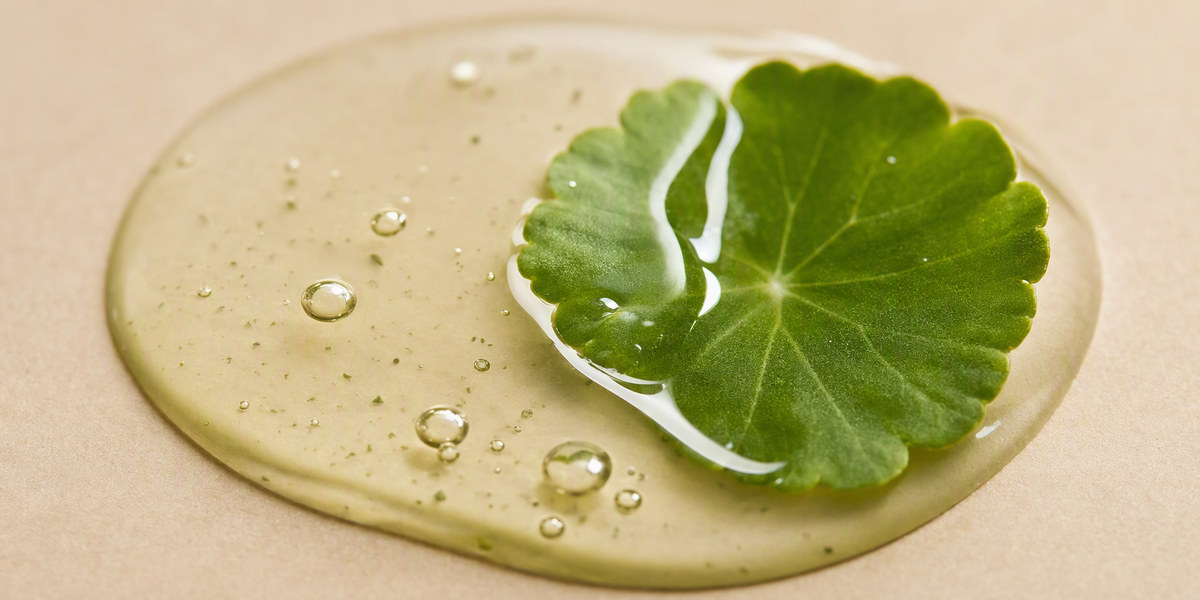
Some triterpene fractions are commonly added in the cool-down phase of an emulsion to limit exposure to high temperatures. This is a typical formulator practice rather than a fixed rule, and your supplier’s stability note should guide the exact step. Odor and solubility vary by grade, so match the solvent — water-, glycerin-, or oil-soluble — to the phase you are building. Shade can also drift between supplier batches, so it is worth keeping a reference standard and checking incoming material against it during incoming quality control.
What Formulation Cautions Matter Most?
- Color budget: verify the extract’s shade against the target product before committing.
- Preservation: water-containing Centella extracts are not preservatives; the overall system still needs an appropriate preservation strategy.
- Phase match: pick the grade that fits the intended phase of the formula.
- Heat step: add concentrated actives in cool-down where the supplier recommends it.
- Supplier spec: confirm assay, solvent, microbial limits, and recommended usage before scaling up.
Centella is generally compatible with common cosmetic systems, but a small pilot batch remains the reliable way to confirm stability, shade, and compatibility. Where the formula already contains other active ingredients, confirm there is no unexpected interaction in the pilot — a stability study is the evidence, not the assumption.
What Claims Can You Make About Centella Asiatica?
Keep claims at the function and appearance level. Phrases such as "skin-conditioning," "helps soothe the look of sensitive skin," "supports the skin’s moisture barrier," and "helps calm the appearance of redness" sit within normal cosmetic claim territory. Avoid crossing into medical or disease language — wording that positions the product as addressing a diagnosed skin condition is outside cosmetic claim scope and should not appear.
Claim rules also vary by market. A wording acceptable in one region may need different phrasing or substantiation elsewhere, so align the claim with the target market before the artwork is finalized. Substantiation matters: the claim you print should match the level and form you actually used, not a generic marketing line.
How Should a Brand Brief a Centella Project?
When you approach a manufacturer, the useful inputs are concrete: the INCI name and form you want, the supplier’s assay and recommended level, the target product format, and the claim wording you have in mind. A technical team can then check the form against your shade budget, preservation system, and market before a sample is made.
If you are scoping a private label or custom line and want to pressure-test a Centella formulation brief against real production constraints, the technical team at CHONGSHENG FUTURE(重生未来) can review the form, level, and claim wording with you before sampling.