A skincare brand should confirm three things before selling on Amazon: that its product carries the labeling its target market requires, that its formula avoids restricted or platform-flagged substances, and that its listing copy and claims stay within cosmetic scope. Getting these right before production saves the cost of fixing inventory after it has already shipped to a fulfillment center.
What does selling on Amazon mean for a skincare brand?
Most small and emerging skincare brands sell as a third-party seller: the brand owns the listing and the inventory. Many use Fulfillment by Amazon (FBA), sending stock to Amazon’s warehouses so Amazon picks, packs, ships, and handles much of customer service and returns. That lowers the operational load on a small team, but it also means products must be packed and labeled to meet inbound shipment requirements.
The appeal is the built-in audience. Amazon is a large online retail marketplace with on-site search and discovery, so a new brand can reach shoppers without first building its own storefront or paying to drive all of its own traffic. The entry barrier is comparatively low, which is why many first-time brand owners test demand there before expanding to other channels.
Why do private-label brands start on Amazon?
Private-label Amazon skincare lets a founder launch a branded product without developing retail relationships or a full direct-to-consumer logistics stack. The marketplace gives the brand a ready-made storefront, a checkout flow, and a customer base that is already searching for skincare. For a first run, that is often a lower-risk way to learn which formats and price points actually sell.
The trade-off is competition and compliance. A crowded listing environment rewards clear positioning and accurate claims, while the platform’s own cosmetic policies add a layer of rules on top of ordinary cosmetic law. Position Amazon as one channel, not the whole business.
What labeling does a skincare product need before listing?
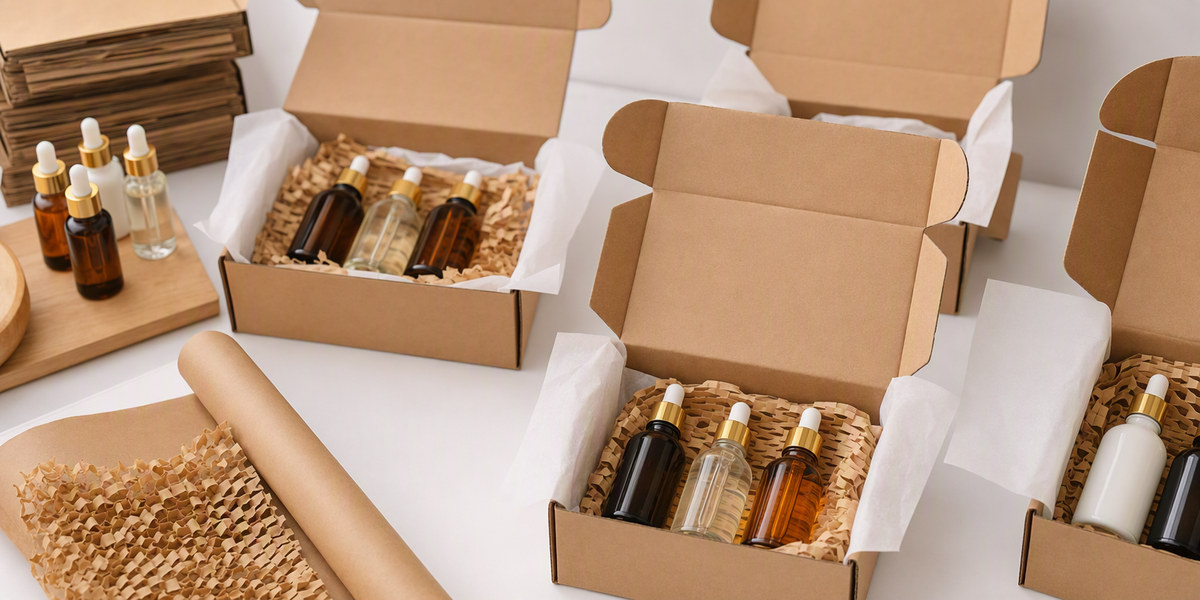
A cosmetic generally needs an INCI ingredient list, net content or weight, the responsible party’s identity and contact, country of origin, a batch or lot code, and — depending on the market — an expiry date or period-after-opening (PAO) symbol, plus any required warnings. The exact set and format depend on where the product is sold: EU, UK, US, and other markets each have their own rules.
For inbound to a fulfillment center, the platform also expects its own carton and unit preparation, including specific barcodes. A manufacturer that serves export markets should be able to advise on the labeling the product needs, but final confirmation rests with the responsible person and the local requirements. Build the label from the intended market, not the other way around.
Which ingredients and substances should a brand watch?
Cosmetic ingredient rules differ by market. Some substances are prohibited, some are restricted to a maximum concentration, and some require special labeling or are barred from certain product types. Commonly watched areas include certain preservatives, color additives, and UV filters, each with market-specific limits.
Amazon also maintains its own restricted-products and restricted-ingredient expectations for cosmetics listings, which can go beyond baseline cosmetic law and change over time. A manufacturer should screen the proposed formula against the target market’s banned and restricted lists and flag problems before production. Discovering a flagged ingredient after a batch is made is an expensive way to learn the rule.
How can a manufacturer help with a small first order?
Minimum order quantity is usually driven by batch economics, component and packaging purchasing, and production setup. Custom-printed packaging typically raises the MOQ compared with stock packaging. Many manufacturers can support a smaller initial batch so a brand can test demand on Amazon before committing to a large run.
The realistic starting quantity depends on the formula, the packaging choice, and the filling line, so see any number as a planning reference rather than a fixed standard. The useful question to ask a manufacturer is not "what is your MOQ" in the abstract, but "what is the smallest compliant batch for this specific product and pack."
What does "listing-ready" mean?
Listing-ready means the product, its imagery, its copy, and its claims are prepared so the brand can build a compliant product detail page. That includes product photography that meets platform expectations, claims that are substantiated and stay within cosmetic scope, and copy that matches the actual formulation and labeling.
A manufacturer can support this by supplying accurate specification sheets, suggesting compliant claim language, and producing artwork that already carries the required regulatory elements. Final listing compliance remains the seller’s responsibility and must follow the platform’s current policy.

How do bundling and sets change the plan?
Brands often bundle SKUs into sets, kits, or gift combinations to raise average order value and improve listing competitiveness. Bundling changes the packing and may change the labeling: a multi-unit pack usually needs its own outer label and a combined content statement. A manufacturer can assemble the bundle and prepare the bundle packaging, but the bundle must still meet the same labeling and compliance basics as the individual units.
What cautions should a brand keep in mind?
Category-specific requirements vary. Some product types sit in special regulatory categories — for example, in the US, sunscreen is regulated as an over-the-counter drug rather than a standard cosmetic — and their substantiation, labeling, and listing rules differ. Confirm the product’s regulatory category before planning the launch.
Claims discipline matters. Skincare claims should stay within cosmetic scope: appearance, cleansing, moisturizing, and supporting the skin’s condition. Avoid disease-style or efficacy claims that cross into drug or medical territory, since both the platform and regulators enforce this line.
Platform policy is separate from law and it changes. Amazon’s cosmetic, gated-category, and restricted-ingredient rules should be verified on the platform for the current period rather than from memory or older posts.
How should a brand prepare before production?
The most expensive problem is finding a labeling, ingredient, or claim issue after inventory is made and sent to a fulfillment center. Work through the market’s labeling set, the formula’s restricted-substance screen, the MOQ that fits a test run, and the listing-ready claim language before any batch is filled. A manufacturer’s role is to surface these risks early and help prepare a compliant, listing-ready product — not to guarantee marketplace approval.
If you are planning a private-label skincare line and want to pressure-test your formulation, labeling, and packaging plan against real production and compliance constraints before you order, our team at CHONGSHENG FUTURE(重生未来)can review it with you and help prepare a listing-ready product for Amazon and other online channels.