A cosmetic preservative that is legal in one country can be capped, restricted or banned in another. The reason is not that safety science changes at the border. The three largest cosmetics markets do not use the same rulebook. The United States has no positive list of permitted preservatives. The European Union and China both use positive lists, but with different entries and limits. If you formulate for more than one market, the preservation system is one of the first things to screen.
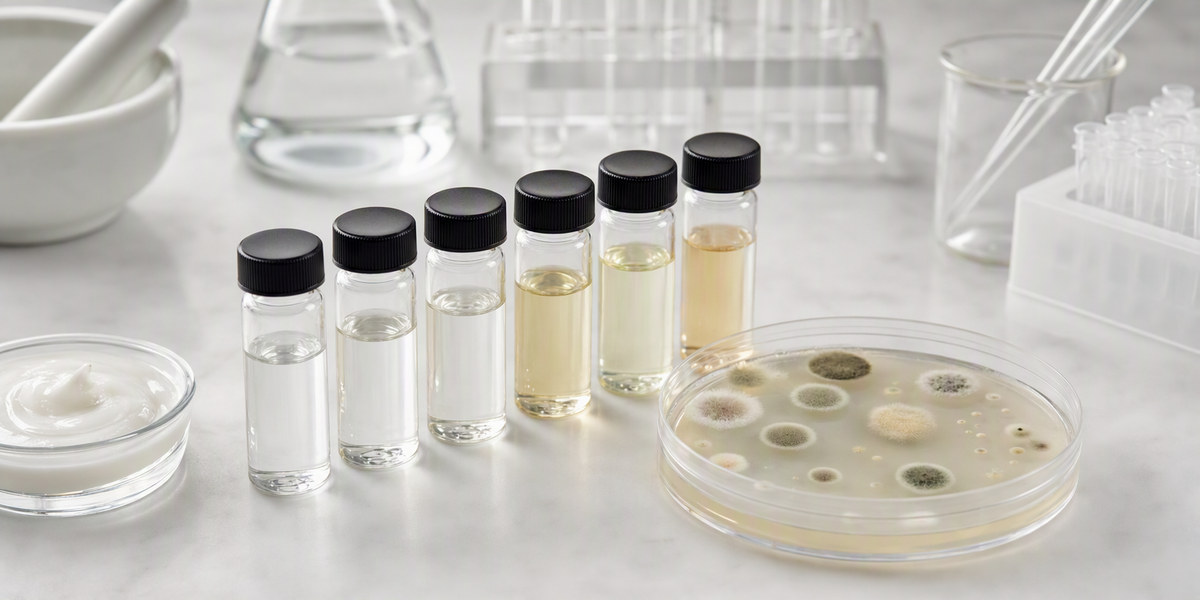
What does a preservative actually do?
A preservative is an ingredient added to a cosmetic to stop microbes such as bacteria, yeast and mould from growing in the product during storage and use. Water-based formulas, whether rinse-off or leave-on, are the most exposed, so a preservation system is a normal part of their formulation. The purpose is product integrity and user protection, not a drug effect.
A few formula traits change the preservation job. Water activity and pH affect which microbes can grow and which preservative works. An oil-only or genuinely anhydrous formula faces much lower microbial risk than a water-based cream, which is why the preservation strategy is decided with the formula rather than added at the end. A preservative-free claim is still a claim: it must be truthful and, where relevant, substantiated, so it does not remove the need to manage microbial safety.
How do the three major markets regulate preservatives differently?
United States
Under the Federal Food, Drug, and Cosmetic Act, cosmetic products and ingredients, apart from color additives, do not need FDA premarket approval. A manufacturer may use any ingredient as long as it is safe under labeled or customary use and is not prohibited or restricted by regulation. Preservatives are handled like any other ingredient. FDA does not keep a positive list of allowed preservatives; it forbids only a short list of substances by regulation. The Modernization of Cosmetics Regulation Act of 2022 added facility registration, product listing, good manufacturing practice and adverse-event reporting, but it did not create a preservative positive list.
European Union
The EU uses a positive list. Under Regulation 1223/2009, only substances explicitly listed in Annex V may be used as preservatives, and each entry sets a maximum concentration, product-type limits and labelling warnings. Annex V is amended from time to time, so the current version must be checked. Common reference limits include phenoxyethanol at up to 1.0 percent in the finished product, methylparaben and ethylparaben permitted within set caps, and several long-chain parabens prohibited under Annex II. Colorants and UV filters follow the same positive-list logic in Annex IV and Annex VI.
China
China also applies a positive-list approach. The Safety and Technical Standards for Cosmetics, 2015 edition, list permitted preservatives in Table 4, 51 entries in that edition, each with a maximum concentration and restrictions. The 2015 revision also moved several parabens from restricted to prohibited. China maintains a separate inventory of existing cosmetic ingredients, and new ingredients follow their own registration or filing route.
Why does the same ingredient land differently?
Parabens are the clearest example. In the United States a paraben can be used provided it is safe and not on the short prohibited list. In the EU the same family is capped and some long-chain members are banned. In China several parabens are prohibited outright. A formula that is compliant in the US may need reformulation for the EU or China.
Formaldehyde-releasing preservatives show the same split. The EU limits the amount of free formaldehyde that may be released and requires a warning above a low threshold; some are restricted. In the US they sit outside the small prohibited list and are used under conditions.
Iodopropynyl butylcarbamate is restricted for children under three and banned in lip products, with different maximum percentages by product type across the EU and China.
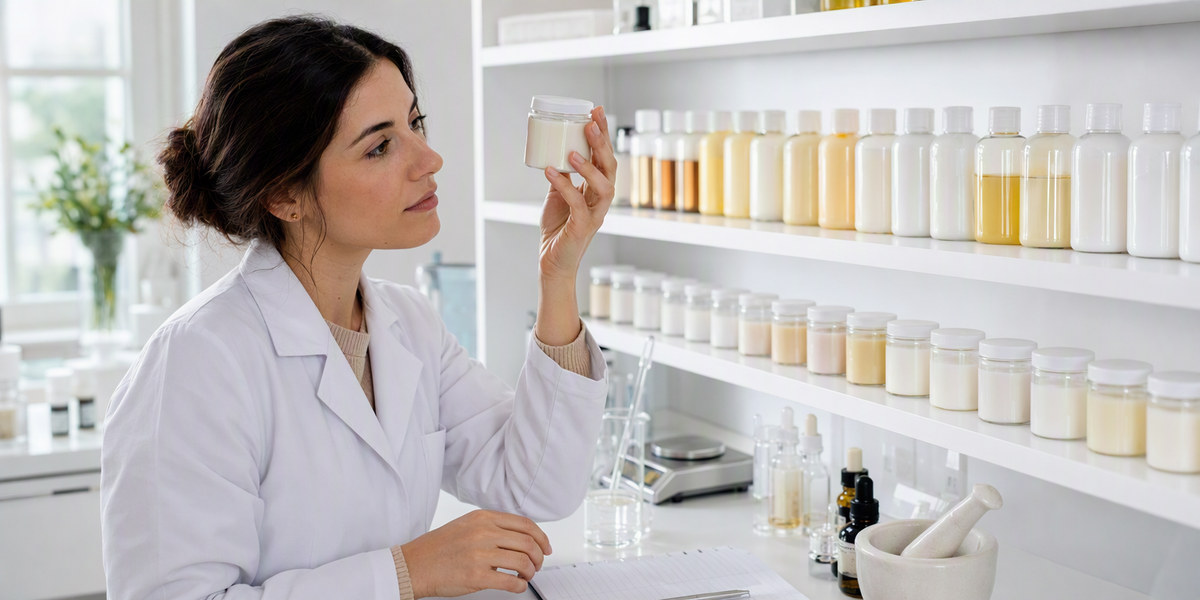
What should a brand verify before launch?
- Confirm the target markets, then screen each preservative against that market’s current positive list or prohibited list.
- Check the maximum concentration and any product-type restriction: leave-on versus rinse-off, products for children, the nappy area, or lip products.
- Confirm labelling duties such as allergen statements or warnings.
- Keep the preservation system supported by challenge-test data suited to the product and market.
- Re-screen whenever the formula changes or a new market is added, because lists are revised over time.
Practical takeaway
Preservation is not a one-size-fits-all choice. The same molecule can be a standard option in one market and a compliance blocker in another. The cheapest way to avoid a late reformulation is to agree the target markets and screen the preservation system against their current lists before the formula is locked.
If you are planning a multi-market formula, share your target regions, product format and preservation preferences with our technical team. We can screen candidate preservatives against the relevant positive lists and build the preservation system into the formula from the start.