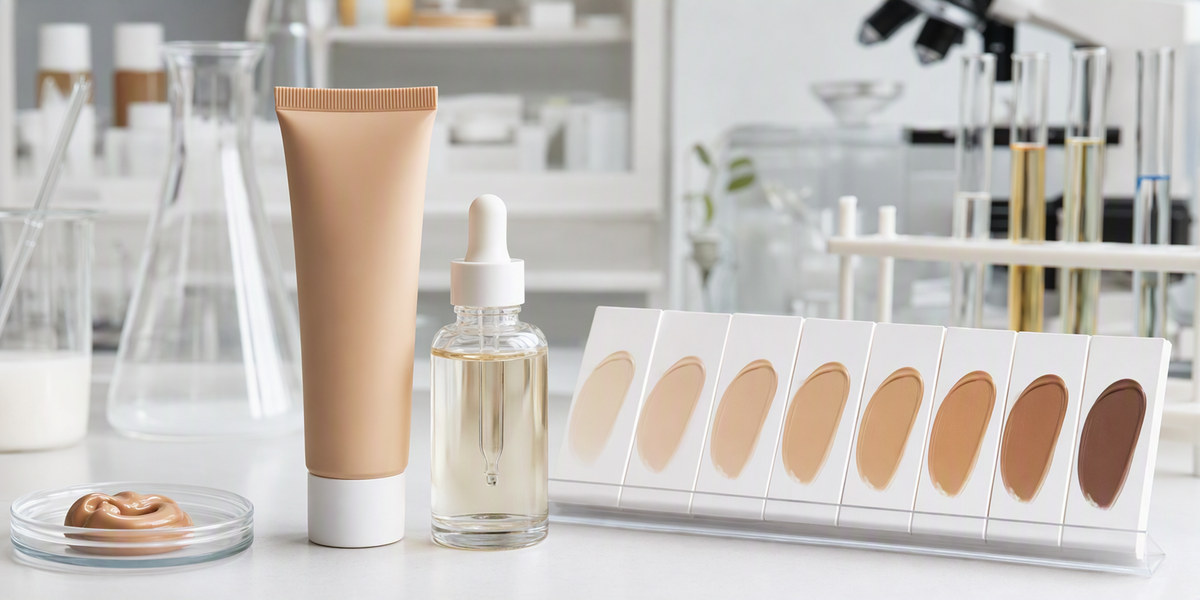
A makeup skincare hybrid puts cosmetic color coverage and skin-care ingredients in the same product. Tinted moisturizers, BB and CC creams, skin tints, cushion compacts and serum foundations all sit in this space. The hybrid label is a positioning choice, not a separate legal category: in most markets the product is still a cosmetic, and the usual claim-substantiation rules still apply. Where a claim crosses into drug territory, such as adding SPF, the classification and the paperwork change.
What counts as a makeup skincare hybrid?
The category is defined by intent, not by regulation. A brand takes a make-up base and adds ingredients more commonly associated with skin care: humectants, soothing agents, barrier-supporting compounds or antioxidants. The result is one product that is meant to both look like make-up and feel like skin care.
Common formats include:
- Tinted moisturizer and skin tint: light coverage with a care base.
- BB and CC creams: coverage plus tone correction or other care positioning.
- Cushion compacts: liquid formula in a sponge-filled pact, popular across Asia.
- Serum foundation: a foundation built on a serum-like vehicle.
- Lip and cheek tints with added care ingredients.
None of these is a legal class on its own. They are make-up products that happen to carry skin-care ingredients.
Why the format is growing
Buyers have been moving toward shorter routines. A product that covers and cares at the same time fits a fewer-steps habit, and it gives a brand one SKU that can be positioned two ways. For a private-label or OEM/ODM program, that dual positioning is attractive because it reaches both the colour and the care shopper.
The trend is real, but it should be read as a positioning shift rather than a new product category with its own rules. The formulation, testing and claim obligations are the same ones that apply to any cosmetic.
What makes the formulation harder
Combining actives with pigment is not a free upgrade. Skin-care ingredients such as niacinamide, hyaluronic acid or peptides must stay stable next to colourants, and often next to UV filters when SPF is included. Several things can go wrong:

| Watch-out | What it means for the formula |
|---|---|
| Shade stability | Actives and pH shifts can move the colour over time, so shade checks belong in the stability plan. |
| Active stability | Some care ingredients lose activity in the pH or solvent system a make-up base needs. |
| Texture and feel | Adding actives and filters can change spreadability, finish and wear. |
| Preservation | Water-containing hybrids still need a preservative system suited to the full formula. |
Because two product types are merged, the testing that each would normally get should not be dropped. Stability work and preservative-efficacy checks are commonly part of the technical substantiation, and the exact protocol depends on the formula, pack and intended shelf life.
Where do the claim lines sit?
This is the part brands most often underestimate. A hybrid name does not create any exemption. Classification follows intended use and claims, judged market by market.
United States
Under the Federal Food, Drug, and Cosmetic Act, a cosmetic is intended to cleanse, beautify or alter appearance; a drug is intended to affect the structure or function of the body, or to mitigate disease. Make-up is a cosmetic. Make-up marketed with sun-protection claims is classified as both a cosmetic and an over-the-counter drug, so it must meet both sets of rules. The Modernization of Cosmetics Regulation Act of 2022 added requirements such as facility registration, product listing, safety substantiation and adverse-event reporting for cosmetics.
European Union
Regulation (EC) No 1223/2009 defines a cosmetic as a substance or mixture applied to external body parts mainly to clean, perfume, change appearance, protect, keep in good condition or correct body odours. Whether a product qualifies is assessed case by case from all its characteristics, and a borderline call often turns on the claims made. A responsible person established in the EU is required.
China
Under the Cosmetics Supervision and Administration Regulation in force since 2021, sunscreen is a special cosmetic that requires registration, so a hybrid with SPF follows that path. The efficacy-claim evaluation rules require brands to substantiate claims and publish a summary for many effect types; claims that are recognised by the senses, such as beautifying or colour correction, are handled differently from claims that need testing.
The practical takeaway: write the claim first, then check the market. The same formula can be a general cosmetic in one region and a special or drug-linked product in another.
What a brand should verify before launch
- Map each claim to the markets you will sell in, and separate appearance claims from function claims.
- Decide SPF status early; it changes classification in the US and China.
- Confirm the substantiation route for every claim, including which claims need testing.
- Plan shade and active stability into the stability program, not as an afterthought.
- Keep the safety assessment and, where required, the responsible-person or registration files ready before launch.
Ask the manufacturer for the full specification, the stability and preservative data, and a clear view of which claims the formula can actually support. A good development partner will tell you which claims are safe to make and which are not.
If you are scoping a makeup skincare hybrid and want to pressure-test the brief against real formulation and claim constraints, our technical team can review it with you before sampling.