For an accelerated protocol, stability testing commonly runs three to six months, a preservative challenge test about four to six weeks, and human efficacy testing used to support a claim four to twelve weeks depending on the study. Those ranges are starting points, not guarantees: the real timeline depends on the product form, the target market and the claims you intend to make. This article breaks down what each test checks, how long it usually takes, and which ones actually sit on your critical path to launch.
What does stability testing actually check?
Stability testing measures how a formula holds up under storage and shipping conditions over time. A standard protocol tracks appearance, color, odor, pH, viscosity, phase separation and microbial limits. The goal is to confirm the product still looks, feels and performs as intended at the end of its shelf life, and to set a defensible expiration date or period-after-opening mark.
Accelerated stability places samples under elevated temperature, sometimes with light or freeze-thaw cycles, to surface problems faster. Real-time stability tracks the product under normal conditions, commonly for six to twelve months. Most brands run accelerated first to catch obvious failures, then confirm with real-time data. Three to six months is a typical accelerated window, but the length depends on the product and the markets you sell into, so confirm the protocol with your manufacturer rather than treating the range as fixed.
How long does a preservative challenge test take?
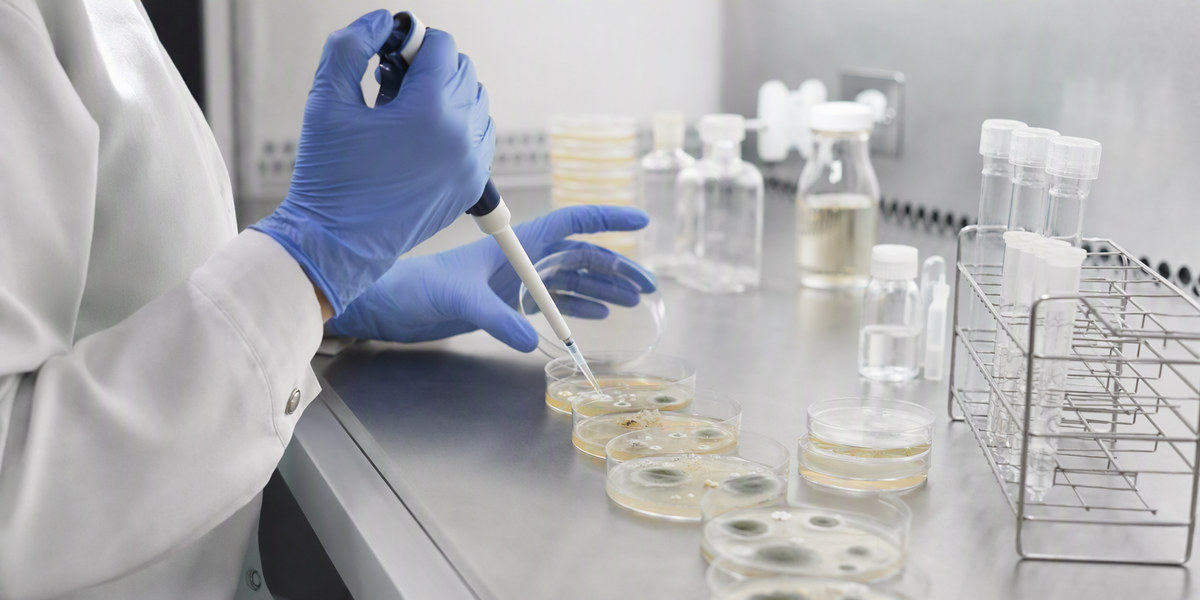
A preservative challenge test, sometimes called a preservative efficacy test or PET, checks whether the preservative system can suppress bacterial and fungal growth after the product is contaminated. It is a standard step for any water-containing product.
The method commonly follows ISO 11930 or a pharmacopeia approach, with microbial counts measured at days 2, 7, 14 and 28. A typical study returns results in about four to six weeks. The timeline is shorter and more predictable than stability because the observation points are fixed by the method. If the formula is preservative-free or relies on alternative protection, the test design and interpretation need more care, and the outcome can affect whether the product is viable at all.
Do you need human efficacy testing?
Not always. Human or instrumental efficacy testing supports a specific claim, for example hydration, firmness or reduced redness measured on skin. It is not a universal requirement for every product, and whether it is expected depends on the claim and the market.
When it is needed, the study commonly runs four to twelve weeks. Claims that require before-and-after measurement at multiple time points, or a controlled consumer-use design, sit at the longer end. Plan this only after the claim set is fixed, because changing the claim late reshapes the protocol and restarts the clock.
Which tests actually block your launch date?
Stability testing is the item most likely to sit on the critical path. It applies to nearly every formula and runs the longest, so the launch date usually moves if stability slips. A challenge test can run in parallel with stability, which protects part of the schedule. Human efficacy testing is the one you can often defer or skip entirely if the claim does not require it, so it should be the last item you commit to.
The practical order is: lock the formula and claims, start stability and challenge together, and add efficacy testing only if the claim demands it. Reading the certificate of analysis your manufacturer provides helps you confirm the starting material specs before this phase begins.
What changes the timeline?
Several variables stretch the schedule and the cost. Formula type matters: alcohol-based, water-based and emulsion products each behave differently under stress. Packaging compatibility can force extra rounds if the material interacts with the formula. Target-market claims drive whether efficacy testing is required at all, and some markets expect data across multiple climate zones. If you are still deciding the manufacturing model, the trade-offs between OEM and ODM also affect how much testing the factory already carries versus what you own and must validate yourself.
How should you plan the testing phase?
Build the timeline backward from your launch date, not forward from today. Put stability on the calendar first, overlap the challenge test, and treat efficacy testing as conditional. Ask the manufacturer for the standard protocol and the observation points up front, and confirm the regulatory expectations for each market before you finalize the formula and artwork. Where the product will be sold changes the rules: the EU requires CPNP notification before a product goes on the market, the US expects facility registration and product listing under MoCRA rather than pre-approval by the FDA, and China applies filing or registration under its cosmetic regulation. Those are different processes, so confirm the applicable one before committing to a date.
What do brands often get wrong?
Two patterns show up often. The first is treating the three-to-six-month stability range as a fixed commitment; it is a typical window, and the actual length follows the product and market. The second is starting efficacy testing before the claim set is locked, which forces a restart. Both are schedule losses that a short planning conversation can prevent. Minimum order quantities also shape the calendar, and the levers behind private label MOQ are worth checking before you promise a date to a retailer.
We run OEM and ODM programs across skincare and personal care. If you are scoping a new product and want to pressure-test the testing and launch timeline against real production and regulatory constraints, our technical team can review your brief with you and map out a realistic schedule.