A fragrance-free skincare formula is one that contains no ingredients added to provide scent. That part is straightforward to specify. The harder part is everything the claim touches: the base still has a smell, several common raw materials carry fragrance allergens whether you add a fragrance or not, and the words on the pack need evidence behind them. Getting a fragrance-free product to market cleanly is a base-formula job, a testing job and a labeling job — usually in that order.
What does "fragrance-free" actually mean?
Fragrance-free means the formula contains no ingredients whose purpose is to provide scent: no parfum, no individual aroma chemicals, and no essential oils added for their smell. It is a formulation statement, not a performance claim.
Unscented is different. In practice, unscented usually means the product’s base odor has been neutralized or masked — and the masking agent itself may be a fragrance ingredient. A product can therefore be unscented without being fragrance-free. Neither term has a fixed legal definition in the United States, where the FDA does not define either phrase. In the EU, both fall under the general claims framework, which requires claims to be truthful, evidence-backed, honest, fair and useful for an informed choice.
| Claim | What it typically means | What it does not mean |
|---|---|---|
| Fragrance-free | No ingredients added to provide scent | Not a statement about allergens carried by other ingredients |
| Unscented | Base odor neutralized or masked | May still contain fragrance ingredients used as masking agents |
| Fragranced | Parfum or aroma chemicals added for scent | Fragrance allergens may need individual declaration in the EU |
Why does fragrance-free not mean allergen-free?
Several substances on fragrance allergen lists occur naturally in botanicals and can enter a formula through ordinary raw materials — linalool, limonene, citral, geraniol, eugenol and the coumarins are common examples. Essential oils are concentrated sources of the same substances. A formula can be genuinely fragrance-free and still carry allergens from extracts, oils or process-related carryover.
That matters commercially because of how labeling works. In the EU, listed fragrance allergens must be declared individually in the ingredient list above 0.001% in leave-on products and 0.01% in rinse-off products. Under Commission Regulation (EU) 2023/1545, the list of individually declarable allergens expands from 26 to more than 80 entries, and products placed on the EU market from 31 July 2026 must carry the updated declaration; stock placed on the market before that date can continue to be sold until 31 July 2028.
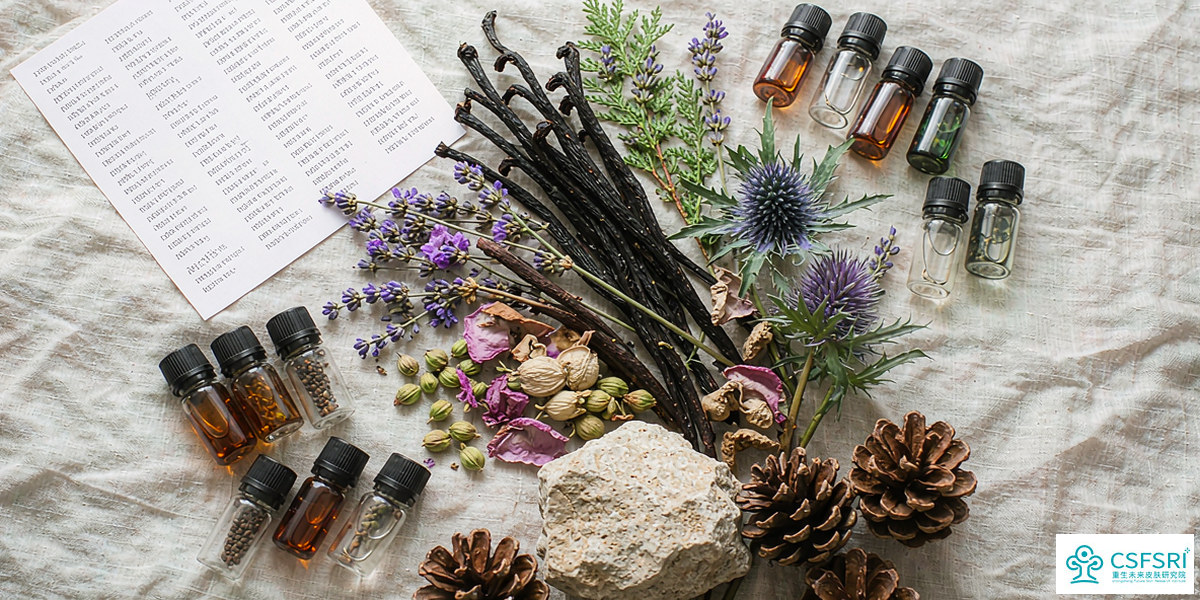
One practical trap: the allergen list and the permitted-ingredient list are not the same thing. Some substances that were once declarable have since been prohibited or tightly restricted in the EU, so an old allergen statement is not a compliance statement. The allergen position of a fragrance-free product therefore comes from the whole formula — not from the fragrance house’s declaration alone.
How do you build a fragrance-free formula that still works?
The real work sits in the base. Many unscented products only needed a fragrance in the first place because the base smelled of something: low-grade oils, certain surfactants, botanical extracts, or oxidation over time. Fixing the base is usually cheaper and more durable than masking it:
- Upgrade the odor-critical raw materials. The cheapest oil or extract grade often sets the ceiling on how the product smells in the bottle and on skin.
- Adjust the process, not only the formula. Higher processing temperatures and longer holds can generate cooked or fatty notes that no dosage change removes.
- Control oxidation. Opaque or airless packaging slows the odor changes that push brands toward scenting in the first place.
- Start from a deodorized or pre-neutralized base where one is available, instead of adding a masking agent late in development.
If masking is genuinely unavoidable, check what the masking agent is. Masking agents are often fragrance ingredients by function, and whether a masked product can still be sold as fragrance-free depends on the agent, its purpose and the market. Settle that question with your regulatory advisor or manufacturer before the claim reaches artwork, not after.
Plan the sensory side deliberately as well. Without a scent, texture, spread and after-feel carry the whole experience, so evaluate the final formula with real users rather than assuming a neutral base delivers a neutral experience.
What changes in testing when you remove fragrance?
Fragrance materials participate in the microbiological and oxidative balance of a product, and removing them changes both. Two points matter for planning:
- Preservation efficacy. Water-containing products are commonly protected with a preservative system, and its performance is commonly verified with a preservative efficacy (challenge) test — ISO 11930 is the most widely referenced method. A de-fragranced formula is a different formula, so re-test the final version rather than carrying over data from the scented pilot.
- Stability. Fragrance can influence odor stability and, in some systems, appearance. Run stability on the final packaged product in its intended packaging, not on the bulk.
What can you claim, and what evidence do you need?
In the EU, claims are judged against the six common criteria in Regulation (EU) No 655/2013: legal compliance, truthfulness, evidential support, honesty, fairness and informed decision-making. Two of these bite specifically for free-from marketing. First, the claim must be true of the finished product as sold — fragrance-free has to mean no scent ingredients, not merely no declared parfum. Second, free-from claims must not denigrate legally used ingredients: implying that a product without preservatives is therefore unlikely to sensitize, for example, counts as an unfair claim.
"Hypoallergenic" deserves particular care. It has no harmonized EU definition, and the substantiation sits with the Responsible Person, who keeps it in the Product Information File (PIF). Whatever you claim, avoid implying medical suitability: fragrance-free does not mean suitable for everyone with a diagnosed fragrance allergy, because reactions can also be triggered by other ingredients. Consumers with diagnosed allergies are better served by a dermatologist than by a marketing line.
How do labeling rules differ by market?
| Market | What the label must show | Practical implication |
|---|---|---|
| EU | Full INCI ingredient list in descending order; listed fragrance allergens declared individually above 0.001% (leave-on) and 0.01% (rinse-off); expanded list from 31 July 2026 | Get an allergen breakdown of the whole formula, including extracts, before artwork is finalized |
| China | Full ingredient list under "成分"; where the registered formula lists only "香精", the label may state "香精"; allergen-by-allergen disclosure goes under safety warning statements when required | What you declare in the registration shapes what the label can say — align the two early |
| United States | Ingredient declaration under the FPLA; "fragrance" may be declared generically; no federal allergen-list requirement currently | MoCRA has directed the FDA to set an allergen disclosure rule — keep records so relabeling is quick when it lands |
| UK and others | GB runs its own regime derived from EU law and does not automatically follow new EU amendments; Japan and ASEAN have no equivalent mandatory allergen labeling | Do not copy EU artwork into other markets without a local check |
What should you ask your manufacturer before locking the formula?
- An allergen breakdown of the complete formula — including botanical extracts and oils — not just the fragrance declaration.
- Confirmation of which ingredients, if any, are added for scent or odor masking, and what function each performs.
- Preservation efficacy data on the final formula, and stability data on the final packaged product.
- The substantiation file for every claim on the artwork, ready for the PIF.
- A labeling plan per target market, with artwork timing checked against the EU 31 July 2026 date if you plan to place products there.
If you are planning a fragrance-free or sensitive-skin line, our technical team at CHONGSHENG FUTURE(重生未来) can review the base formula, the allergen position and the claim set against your target markets before sampling begins.