PDRN should be sourced as a clearly defined cosmetic-grade raw material from a qualified supplier, with the ingredient’s role and claim boundaries written into the brief before formulation — that way you control both quality and the line between cosmetic support claims and medical-style language. PDRN (polydeoxyribonucleotide) is a DNA-derived cosmetic ingredient, not a drug, and keeping that distinction visible from the start is what keeps your label clean.
What Is PDRN in a Skincare Context?
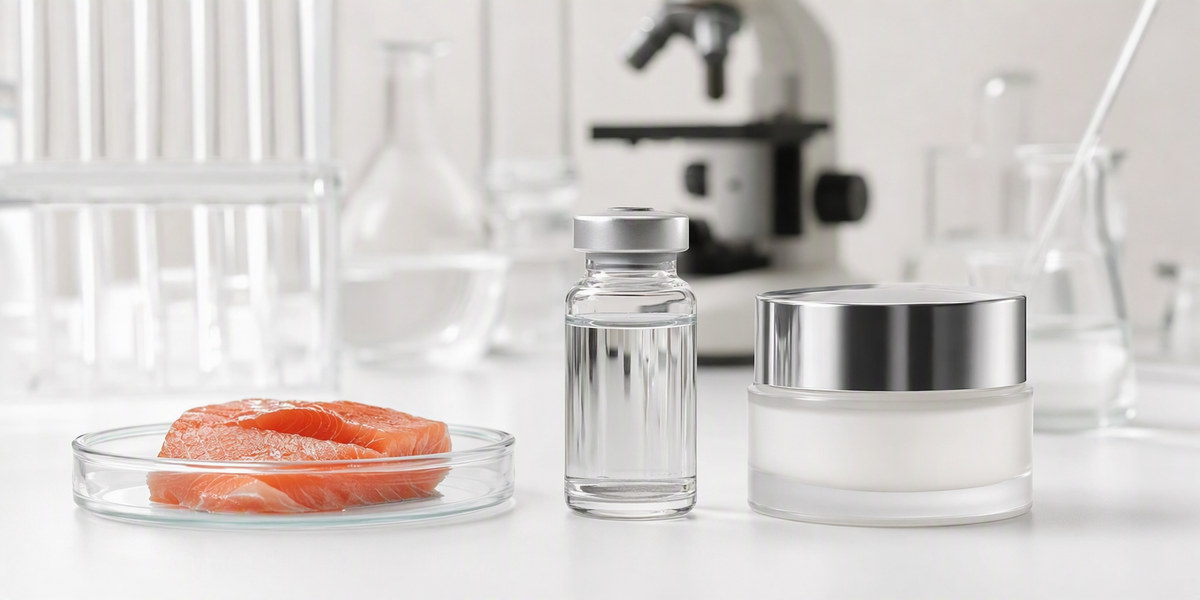
PDRN stands for polydeoxyribonucleotide, a mixture of deoxyribonucleotide polymers, essentially fragments of DNA. In cosmetics it is most commonly sourced from salmon, because salmon DNA is structurally similar to human DNA, which is the usual reason it appears as a topical ingredient. Other origins exist, including plant-derived and fermentation routes, but salmon-derived material is the form most often seen in cosmetic raw-material catalogs.
The point that protects your marketing later is simple: a cosmetic PDRN raw material is a formulation component for external use, not a product intended for other routes of administration. Frame it that way in the spec and the claim line stays where it belongs.
Brands reach for it because it fits a "skin-supporting" positioning that performs well in markets where buyers look for gentle, biology-inspired ingredients. That popularity is exactly why claim discipline matters: a widely used ingredient attracts more reviewer attention, not less.
What Forms and Specs Does PDRN Come In?
Suppliers offer PDRN in a few practical forms, and the choice changes how you formulate and what documents you receive.
| Form | Typical use | What to confirm |
|---|---|---|
| Lyophilized (freeze-dried) powder | Concentrated stock, reconstituted at the plant | Reconstitution solvent, solubility, stability after opening |
| Aqueous solution | Added directly to the water phase | Concentration, preservative system, microbial limits |
| Different molecular-weight grades | Lower weights often chosen for leave-on skin feel | MW range, batch-to-batch consistency |
For topical skincare, confirm the grade is explicitly cosmetic and intended for external use. Material meant for other routes should not be presented as equivalent for a cosmetic product.
Concentration is normally stated by the supplier for the supplied form, and the formulator then dilutes to the finished-product level. Ask for the as-supplied figure in writing so your formula record and the label claim stay consistent, and so the finished concentration can be confirmed during incoming quality checks.
What Should You Check When Qualifying a PDRN Supplier?
Sourcing is less about finding the cheapest vial and more about getting consistent, documented material. A practical qualification checklist:
- Certificate of Analysis (COA): batch-specific values for identity, purity, microbial limits and heavy metals.
- Specification sheet: form, concentration, molecular-weight range, pH and storage conditions.
- Origin and traceability: salmon species and source region, plus the supplier’s manufacturing standard. Cosmetic GMP is common, and some suppliers also hold ISO 22716.
- Safety documentation: SDS and any fish-origin note, since salmon-derived material carries a fish-origin consideration in some markets.
- Stability data: supported shelf life and storage, relevant to your finished product’s dating and claim.
For a biological-derived raw material, batch-to-batch consistency usually matters more than unit price. A low quote with thin documentation is a later risk, not a saving.
Where Do the PDRN Claim Lines Sit?
This is the part that decides whether your marketing survives review. Cosmetic claims describe appearance and care, not a remedy for a condition or a form of tissue regeneration. The table below shows how wording shifts across that line.
| Safer cosmetic-level wording | Language to avoid |
|---|---|
| Helps support the skin’s appearance | Claims of skin or tissue regeneration as a product effect |
| Moisturizing, helps improve the look of skin | Claims that position the product as a solution for a skin condition |
| Formulated for skin comfort | "Anti-inflammatory" stated as an efficacy claim |
| A topical cosmetic ingredient | "Medical" or "injection-equivalent" grade framing |
Research context is allowed when framed as background rather than a promise. You may note that in vitro studies suggest PDRN may play a role in certain skin-supporting processes, presented as information, not as a product claim. Product claims, though, should stay at the cosmetic level and be proportionate to any substantiation you hold.
Requirement also varies by market. What reads as an acceptable claim in one region may need different wording or substantiation elsewhere, so confirm the claim rules for each target market before artwork is finalized. Document the chosen wording in the product specification so the claim, the formula and the artwork all agree before submission.
How Should You Brief a PDRN Supplier?
A clear brief prevents mismatched material and claim disputes later. Put these points in writing:
- Intended product format (serum, cream, ampoule) and target market(s).
- Required form and grade: cosmetic, topical, with any molecular-weight preference.
- Documentation set: COA, spec sheet, SDS, stability and origin or traceability.
- QC expectations: purity, microbial limits, heavy metals and any allergen labeling.
- An explicit note that the material is for cosmetic use, with no medical or therapeutic claims attached.
Asking these questions up front lets the supplier return a realistic quote, lead time and document package instead of a generic catalog line.
Key Takeaways
- Source PDRN as a documented cosmetic-grade raw material, not a medical product.
- Qualify suppliers on COA, specs, traceability and GMP, not price alone.
- Keep claims at the appearance or support level and check them per market.
- Brief the supplier on format, grade, documents and claim boundaries together.
If you are building a PDRN-containing formula and want to pressure-test the ingredient spec and claim wording against real production and target-market constraints, our technical team at CHONGSHENG FUTURE can review the brief with you before sampling.