Mens grooming private label is no longer a niche add-on — it is a category overseas buyers now ask for by name. Building one with a contract manufacturer comes down to three decisions: which formats fit your sales channel, which claims you can stand behind, and how the production timeline actually breaks down. Get those right and the rest is execution.
What actually separates mens grooming from a womens line?
The difference is rarely the active ingredients. It is format, texture, fragrance and packaging. Mens products tend to favor lighter textures, faster routines and neutral or woody scent profiles. A two-step regimen (cleanse, moisturize) usually outperforms a six-step ritual that reads as effort.
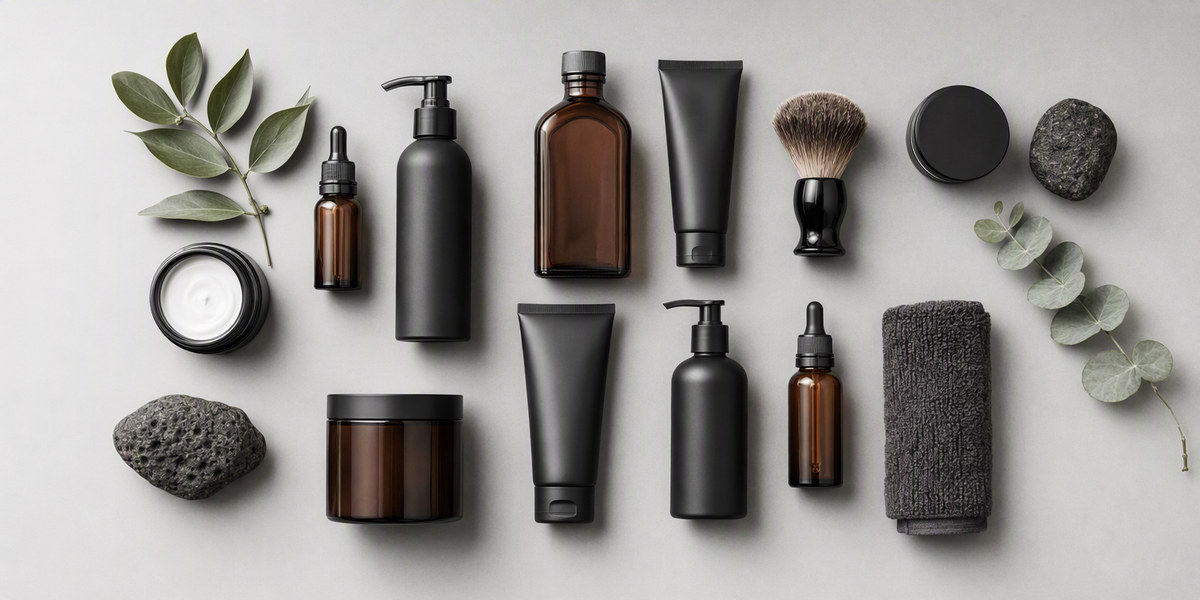
- Texture: gels, fluids and matte creams over rich balms.
- Fragrance: subtle, often unscented or fresh-citrus, rarely floral.
- Packaging: darker, angular, refillable-friendly formats test well.
- Routine length: the fewer steps, the higher the completion rate.
Which formats should a mens grooming line include?
Most successful private label launches start narrow — two or three hero SKUs — then extend. A typical starter set covers the daily non-negotiables and one differentiation item.
- Face cleanser (gel or mild foam) — the entry product every routine needs.
- Daily moisturizer with SPF, or a separate SPF for daytime.
- Beard or stubble care (oil or balm) where the audience grows facial hair.
- Targeted serum (niacinamide or caffeine) as the "why now" hero.
The hero serum deserves a note: caffeine and niacinamide are well-tolerated, widely understood actives that read as "functional" rather than "clinical." That framing suits a male audience that wants results without a regimen that feels like skincare for its own sake. Keep the first run lean — a contract manufacturer can add SKUs after the hero items prove demand, which protects cash flow and simplifies stability testing.
What claims can you make without crossing a line?
Mens grooming is still cosmetics, so the same rules apply: you describe appearance and comfort, not treatment. "Soothing" and "matte finish" are defensible; "cures razor burn" is not. Regional frameworks differ, so confirm claim boundaries with the market you sell into.
| Claim type | Generally acceptable | Avoid |
|---|---|---|
| Texture or finish | matte, lightweight, non-greasy | medical, therapeutic |
| Comfort | helps calm the look of redness | treats, heals, cures |
| Function | cleanses, hydrates, refreshes | repairs damaged skin |
A good contract manufacturer will flag claim wording during the brief review, before artwork is locked. Treat that as a free compliance pass, not a delay.
How does the timeline break down with a contract manufacturer?
Private label does not mean instant. Even with an existing base formula, expect the clock to start at brief and end at shippable goods. The table below is a realistic mid-range, not a floor.
| Stage | Typical window | What happens |
|---|---|---|
| Brief and quote | 3-7 days | format, claims, volume, target cost |
| Sampling | 2-4 weeks | 2-3 rounds, texture and scent tuned |
| Stability and challenge test | 4-12 weeks | depends on claims and markets |
| Production and fill | 3-6 weeks | after artwork and components land |
The single biggest variable is component lead time. Custom caps and printed bottles move slower than standard stock, so decide packaging early or accept a longer tail. Note that "private label" and "custom formulation" sit on a spectrum: starting from a manufacturers proven base shortens sampling, while a fully bespoke brief extends it. Be honest about which one you need.
Where do teams underestimate the cost?
Two places. First, the second and third formula rounds cost more than the first because scent and texture rarely land on attempt one. Second, certification for specific markets adds both time and a per-batch documentation load. Budget for both before you commit a launch date.
Related reading
- Private Label Skincare MOQ: Four Levers to Watch
- OEM or ODM: Which Manufacturing Model Fits Your Skincare Brand?
- What a Cosmetic COA Tells You and What It Does Not
If you are scoping a mens grooming line and want to pressure-test your brief against real production constraints — format choice, claim wording, realistic lead times — our technical team can review it with you before you lock artwork.